Last year a retail group invested heavily in a flagship big data analytics platform. New cloud infrastructure, a dedicated data science team, executive dashboards in every regional office, and an ambitious roadmap presented to the board. Eighteen months later the platform was running, the cost was real, and the merchandising teams were still making their key decisions from the same spreadsheets they had used five years earlier.
Sound familiar? It should. Research from Gartner has consistently found that around 80 percent of analytics projects fail to deliver business outcomes, even when the technology itself works as designed. Not because the platforms underperform. But because the most damaging mistakes sit upstream of the technology, in decisions leaders make before a single pipeline is built.
In 2026 the organisations getting big data analytics right are not those with the largest data lakes. They are those who understand why most projects quietly fail and address those mistakes before the investment is made.
Mistake 1: Projects Start With Technology Instead of Decisions
The first mistake leaders make is sequencing. Most initiatives begin with a platform choice, a vendor selection, or an infrastructure design. The actual business decisions the analytics are meant to inform get defined afterwards, often by teams who were not in the original technology conversations.
A logistics firm spent fourteen months standing up a sophisticated analytics platform before anyone asked which operational decisions would change once the platform went live. The answer turned out to be almost none. The platform delivered dashboards beautifully. The decisions stayed exactly where they had always been made, in regional manager meetings using local judgement.
Tips to address and resolve: Before approving any big data analytics budget require the sponsoring leader to list the ten specific business decisions the project will improve. If the list is vague the project is not ready. Define the decisions first, then design the analytics architecture to serve them. Every successful analytics programme works backwards from decisions, not forwards from data.
Mistake 2: The Difference Between Big Data Analytics and Data Analytics Is Missed
The second most consistent mistake is conceptual. Leadership teams often treat big data analytics vs data analytics as interchangeable terms. They are not. Data analytics describes the broader discipline of analysing data to inform decisions. Big data analytics specifically addresses scale, velocity, and variety problems that traditional analytics cannot solve.
When organisations apply big data architectures to problems that do not actually need them, they create complexity, cost, and delivery risk without any corresponding business value. The most expensive analytics projects are often the ones that should have been simple analytics projects.
Tips to address and resolve: For every analytics initiative ask whether the problem genuinely requires big data scale or whether a well designed traditional analytics solution would deliver the same outcome at a fraction of the cost. Reserve big data analytics for problems where volume, velocity, or variety make traditional approaches genuinely unfit. Discipline at this stage saves significant cost downstream.
Mistake 3: Big Data Analytics Tools Are Selected Before Use Cases Are Defined
The third mistake that derails big data analytics projects is reversed selection logic. Big data analytics tools get selected first, often based on vendor relationships, analyst rankings, or peer adoption. The use cases the tools are meant to support are identified afterwards and quietly reshaped to fit what the tools do well.
This pattern is particularly visible in technology organisations where CIOs and CTOs face pressure to standardise on enterprise platforms before the analytics use cases have actually been defined. The result is impressive infrastructure serving thin business value.
Tips to address and resolve: Define your three to five highest value use cases before evaluating any big data analytics tools. Test shortlisted platforms against those specific use cases rather than against generic feature comparisons. The right tool for the wrong problem creates more long term cost than the wrong tool for the right problem.
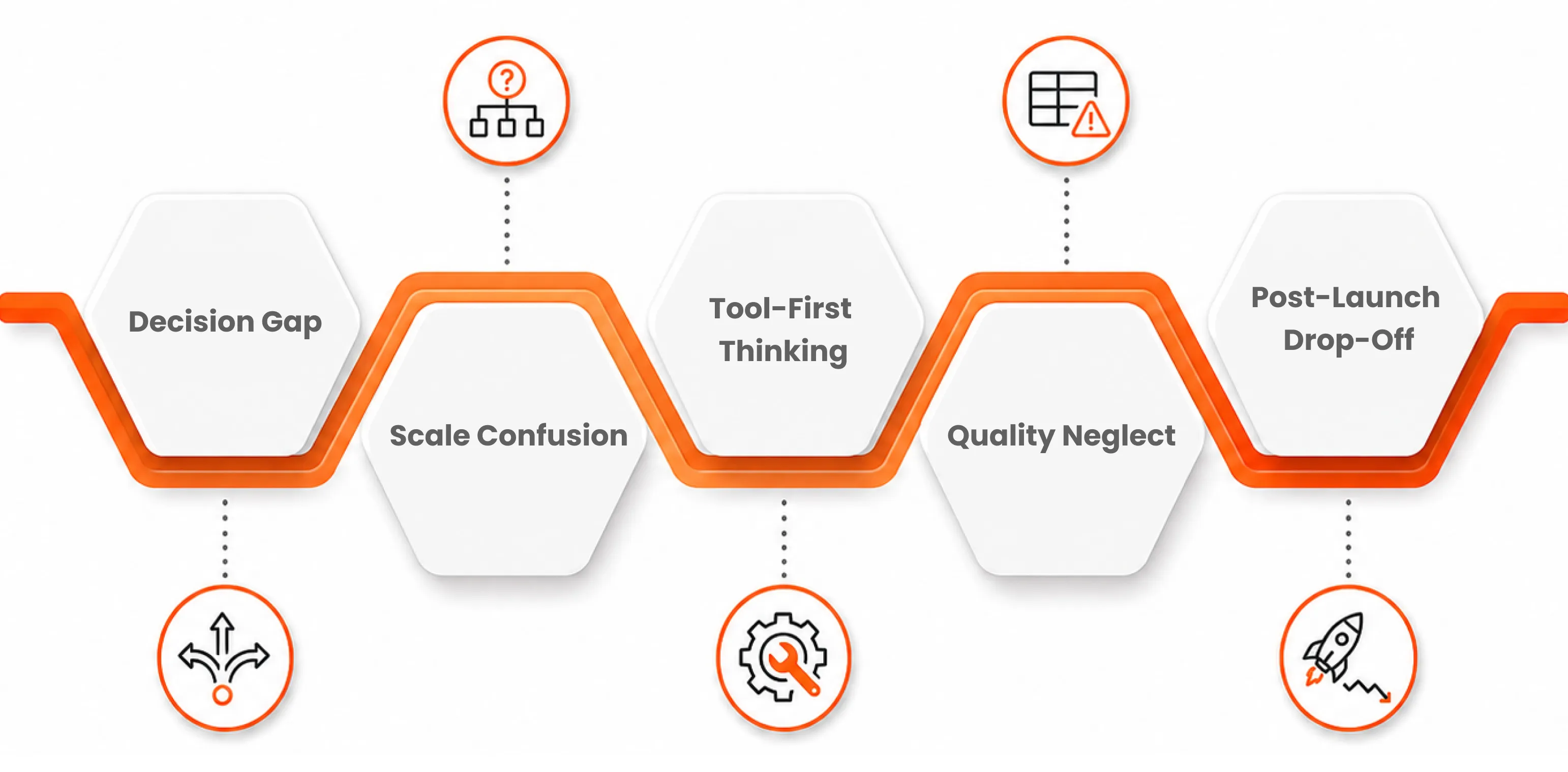
Mistake 4: Data Quality Is Treated as a Phase Rather Than a Discipline
The entrepreneurial temptation in analytics work is to treat data quality as a project phase that can be completed and closed. Run the cleanup. Standardise the schemas. Build the validation rules. Move on. The reality is that data quality is an operating discipline that requires permanent ownership, ongoing investment, and continuous measurement.
Organisations that treat data quality as a phase consistently discover that their analytics outputs become less trustworthy over time, even when the platform is performing perfectly.
Tips to address and resolve: Build data quality into your operating model as a permanent function, not a setup task. Assign clear ownership for each critical data domain. Define and monitor data quality metrics alongside performance metrics. What is big data analytics with example based outcomes worth if the underlying data has quietly drifted from accurate. Sustainable analytics requires sustainable data quality.
Mistake 5: Leadership Stops Engaging Once the Platform Is Live
The most overlooked mistake in big data analytics projects is structural. Executive sponsors engage heavily during the platform build, attend launch events, and then quietly disengage. The assumption is that once the technology is operational the business value will follow automatically. It does not.
Without sustained leadership attention on adoption, decision changes, and measurable business outcomes, the platform becomes an expensive reporting layer that no one is accountable for translating into results.
Tips to address and resolve: Build analytics adoption and business outcome metrics into the standing leadership review cadence. Make the sponsoring executive accountable for adoption rates and decision changes for at least eighteen months after the platform goes live. The platform launch is the beginning of the value capture phase, not the end of the project.
Why These Mistakes Compound
These five mistakes that cause big data analytics projects to fail do not appear in isolation. Projects that start with technology instead of decisions almost always pick tools before use cases. Organisations that confuse big data analytics with general data analytics tend to underinvest in data quality discipline. And leadership disengagement after launch quietly cancels whatever residual value the platform might have delivered.
The organisations getting analytics right in 2026 sequence decisions before technology, distinguish big data scale from regular analytics problems, select tools against defined use cases, treat data quality as permanent, and keep leadership engaged well beyond launch.
The Bottom Line
Big data analytics failures are rarely technology failures. They are sequencing mistakes, conceptual mistakes, selection mistakes, discipline mistakes, and leadership engagement mistakes. Each one is predictable, addressable, and almost always identifiable before the investment is approved.
Before your next analytics investment ask five questions. Have we defined the decisions before designing the architecture. Does this problem actually require big data scale. Did we choose the tools before or after defining the use cases. Are we treating data quality as a phase or a permanent discipline. And will leadership stay engaged after the platform goes live.
If any answer is unclear address that first. The big data analytics project built on clear decisions, honest scale assessment, defined use cases, sustained data quality, and continued leadership attention will deliver far more than anything launched on the wrong foundation.
Ready to design a big data analytics programme that actually delivers measurable outcomes? Partner with Complere Infosystem and work with experts who understand what separates successful analytics from expensive infrastructure.