Nilesh Mehta explains why legacy system modernization matters for growth, visibility, automation, and stronger business operations in modern enterprises.
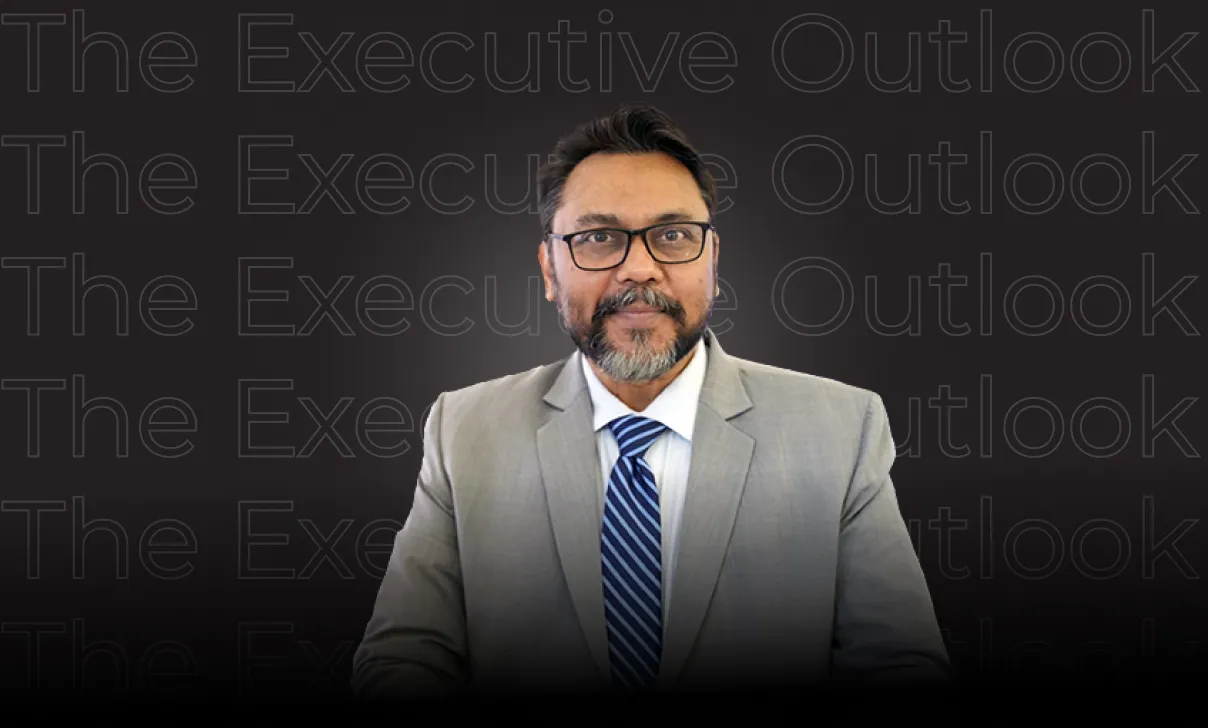
During a recent conversation on The Executive Outlook, Nilesh Mehta shared the moment his career started moving in a new direction.
It was around 2002. He was working as a programmer, writing code for a pharmaceutical field sales team and building solutions on the icrosoft stack. He was good at his work. But then he came across Microsoft SharePoint and felt something shift. He saw that enterprise technology was not only about software. It could change how people worked, collaborated and became more productive.
That instinct stayed with him.
He grew up in a family with a business background. Even while working in technology, he felt he had more potential than his career path was allowing him to use. That feeling pushed him to start his own journey. He built NGenious Solutions, Inc with a focus on enterprise productivity, business process automation, IT operations, ERP, CRM and modern workplace solutions.
But the purpose was never only to build technology for clients. Nilesh also wanted to build a place where ambitious people would not feel limited. He wanted his team to explore, learn, take ownership and do their best work as long as the customer was happy and the project was moving in the right direction.
That same belief shows up clearly in the way he looks at legacy systems today.
For him, a legacy system is not always a broken system. Many old systems still run. Many companies still use them every day. The real question is whether those systems can support where the business wants to go next.
When leaders ask what a legacy system means, the answer is often simpler than they expect.
It is not only an old application. It is a process, platform, or way of working that once supported the business but now limits its speed, visibility and ability to scale.
Nilesh explains digital transformation in very simple words. It is about moving paper, pencil, notebook, Excel based and disconnected processes into digital solutions that people can use.
This matters because the way people work has changed completely. Business no longer happens only from office desks. It happens through laptops, tablets, phones, field teams, manufacturing floors, retail counters and connected systems. Nilesh shared that as a CEO, a large part of his daily work happens from his mobile phone.
That is the gap many legacy systems fail to close. They were built for an earlier way of working. The business has moved forward, but the system has not.
This is where legacy system modernization becomes more than an IT project. It becomes a business decision.
One of the most important points Nilesh makes is that business problems are rarely sudden.
Most issues build slowly. The process becomes slower. A report becomes harder to trust. Teams begin depending on Excel files. People start creating manual workarounds. A few experienced employees become the only ones who understand how things actually move.
The company may still be functioning. It may still be profitable. It may even grow. But underneath that growth, the foundation becomes harder to manage.
This is the hidden cost of a legacy system.
It creates dependence on people instead of processes. It limits visibility. It slows decision making. It keeps teams reactive instead of proactive. And when the business wants to scale, these problems become impossible to ignore.
He is clear about this moment. When a company decides it wants to become bigger and better, it can no longer keep running on old processes. Growth exposes what the business has been tolerating for years.
One of the strongest legacy system examples Nilesh shared came from a retail organization in the United States.
The company was using an old help desk and ticketing platform that had been in place for years. Technically, the system existed. Technically, people were using it. But the organization was using only a small part of what the platform could actually do.
They were paying a significant annual cost, but the system was not delivering the value it should have delivered.
Everything was being treated like an incident. The platform was not clearly separating incidents, problems, requests and changes. Reporting was limited. The response time was slow. The business was operating in a reactive way because the system was not helping teams understand issues properly.
Nilesh’s team implemented ServiceNow as a modern IT service management platform in around six to eight weeks.
The change was not only technical. It gave the business better categorization, better reporting, stronger knowledge base support and faster resolution. Internal support teams and customers could solve problems more efficiently. The organization moved from firefighting to a more proactive way of working.
That is what legacy system modernization can do when the business knows what it needs and the implementation is focused on outcomes.
The second example Nilesh shared came from a manufacturing company in Mumbai.
The company was running important operations through Tally, multiple Excel spreadsheets and manual processes. The inventory was tracked separately. Production had its own process. Financials were handled elsewhere. Sales and purchase tracking were not fully connected. Leaders did not have one clear view of the business in real time.
The issue was not that people were not working hard. The issue was that the system around them was not helping them scale.
Nilesh’s team implemented Microsoft Business Central as an ERP platform in less than four months.
With that change, the company gained visibility across finance, inventory, production, sales and purchasing. Processes have become more connected. Reporting became more accurate. The business could see what was happening instead of depending on scattered files and manual updates.
This is the real value of legacy system integration. It connects the parts of the business that were previously working in isolation.
For leaders, this is where modernization becomes powerful. It gives business control, visibility and confidence to grow on a stronger foundation.
He is honest about why both projects moved quickly.
The clients had clarity.
They knew what they wanted. They understood their pain points. They were ready to work as partners. That made the implementation faster and smoother.
This is an important lesson for every executive considering legacy system modernization. Technology partners can guide, build and implement. But the speed of transformation often depends on how clear the business is before the project begins.
Many organizations start modernization without internal alignment. Teams do not agree on requirements. Leaders are unsure of priorities. Decisions take too long. As a result, the project stretches.
When clarity is present, projects move faster. When clarity is missing, even the best technology can get stuck.
Nilesh’s point is practical. Before choosing a platform, leaders should understand what they want to improve, where the current process is failing and what outcomes the business expects.
For him, transformation must connect back to business value.
The strongest outcome is simple. The company either saves money or makes more money. But he also points out that not every return is immediate or directly visible in the first month.
Some outcomes are operational. The company becomes less chaotic. Teams communicate better. Processes become easier to audit. Employees become more productive. Customers receive faster responses. Leaders get better visibility into what is happening.
Over time, all of this supports financial performance.
When a company functions better, it produces better. When it produces better, it creates stronger business results.
That is why legacy system modernization should not be seen as a technology expense. It should be seen as a foundation for better operations, better decisions and better growth.
He also spoke about the growing interest in AI across businesses.
His view is practical. Companies should not use AI only because it is trending. They should first identify where AI can improve everyday work, support brainstorming, increase efficiency and make business processes smarter.
AI can support faster issue resolution, better knowledge management, improved service operations and stronger productivity. But it must be used with care.
He also raises an important security point. Businesses need to educate their teams about which AI platforms to use and what kind of data should not be shared. AI can create value, but only when it is used responsibly.
For executives, this is an important reminder. AI adoption should be connected to business process improvement, not treated as a separate experiment.
Across the conversation, Nilesh does not frame legacy system modernization as a technology upgrade. He frames it as a growth decision.
The legacy system may still run. But if it limits visibility, slows teams down, depends on manual work and prevents the business from scaling, then it is already costing the company more than leaders realize.
Modernization is not about replacing old tools for the sake of change. It is about building a business that can operate with more clarity, speed and control.
Nilesh’s message to leaders is simple.
If your ambition is bigger than your current systems, the gap will eventually show up. It may show up in reporting. It may show up in customer service. It may show up in inventory, finance, operations, or employee productivity.
The question is whether the business will wait until the system becomes a visible problem or modernizes before growth starts breaking the process.
That is the leadership decision behind every legacy system.
Want to hear more conversations with leaders transforming business operations through technology and modernization? Explore more on The Executive Outlook.

Listen in for business strategies and interviews with business experts to help you build a business and a life that you love.
About Us