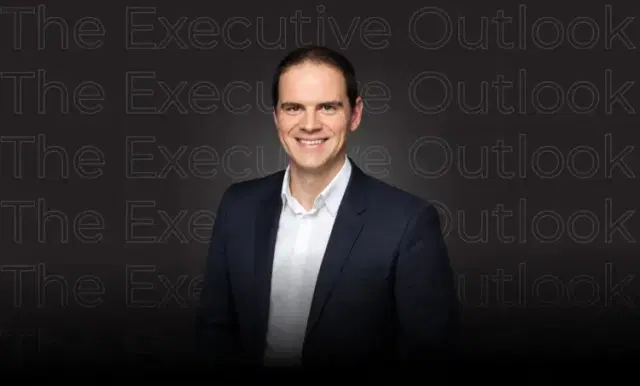
Discover how Alexandre Horvath, an expert in cybersecurity and data protection, highlights AI's role in securing data and why businesses must prioritize these measures today.
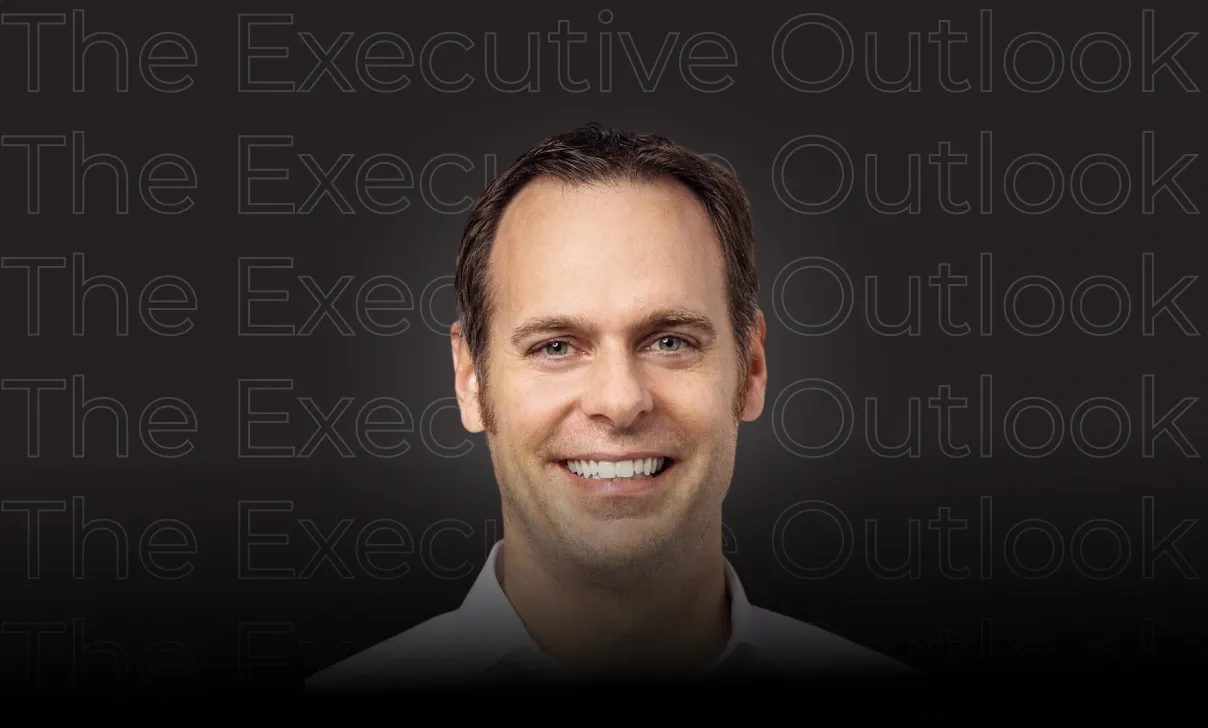
In this episode of The Executive Outlook, we speak with Alexandre Horvath, a seasoned leader in cybersecurity and data protection. With more than two decades of experience across industries, including financial services and emerging Web3 ecosystems, he has built his career around one central belief: organizations cannot succeed in a digital world without protecting their data.
Today, cyber threats are evolving faster than ever. Businesses rely heavily on technology, cloud infrastructure, and digital communication to operate. That dependence means cybersecurity and data protection are no longer optional responsibilities handled quietly in the background by IT teams. They have become strategic priorities for leadership.
During our conversation, Alexandre shares insights from his professional journey, the lessons he has learned from years of securing organizations, and why even the smallest businesses must rethink how they approach cybersecurity.
Alexandre’s journey into cybersecurity began with a natural curiosity about technology.
Like many professionals who entered the digital world in its earlier days, he started by building hardware, experimenting with networks, and exploring the possibilities of the internet when it was still new to many businesses and households.
“I was always interested in IT,” Alexandre explains. “In the early days, we experimented with building networks and connecting systems. As those networks grew, it became obvious that the next challenge was security.”
That early curiosity gradually turned into a professional path. Alexandre moved into roles where he helped design and manage networks within larger organizations. As systems became more complex and businesses began depending more heavily on digital infrastructure, the importance of cybersecurity and data protection became impossible to ignore.
At one stage of his career, Alexandre transitioned into IT audit, a role that gave him direct exposure to how organizations control and protect their information systems. IT audits focus on ensuring that proper security controls are in place, so companies do not accidentally expose sensitive data or allow uncontrolled access to critical systems.
That experience gave Alexandre a deeper understanding of how governance, compliance, and security must work together. From there, his career evolved toward cybersecurity leadership, eventually expanding into data protection and privacy responsibilities as well.
Today, Alexandre sees cybersecurity, data protection, and artificial intelligence becoming increasingly interconnected.
Organizations are rapidly adopting AI-powered tools to analyze data, automate operations, and improve decision-making. But these advancements also introduce new security challenges.
“If you don’t understand what data your AI systems are using,” Alexandre says, “then you’re already dealing with cybersecurity and data protection challenges.”
AI systems depend on data. Without proper classification and governance, organizations risk exposing sensitive information or losing visibility into how their data is being used.
That is why Alexandre believes data classification must be treated as a core part of cybersecurity.
If an organization cannot clearly identify which data is confidential, which is public, and where that data resides, it becomes extremely difficult to respond effectively when a breach occurs.
Despite major advances in security technologies, Alexandre believes many organizations still struggle with one of the most basic responsibilities: understanding their own data.
More than 20 years ago, when he began working in cybersecurity, companies were already finding it difficult to properly classify and manage data. What is striking is that many of those same challenges still exist today.
Organizations now store massive volumes of data across multiple systems, cloud environments, and external platforms. Without proper classification, they cannot accurately determine the true impact of a breach.
For example, if an attacker gains access to company data, it is critical to know whether that information was confidential, regulated, or publicly available. Without clear classification frameworks, businesses may not even know how serious the incident actually is.
In addition to classification, companies must understand where their data resides. Is it stored internally or in the cloud? Is it being transferred between systems? Is it properly encrypted end-to-end?
These are no longer technical side questions. They are fundamental to strong cybersecurity and data protection.
One of the most common misconceptions in cybersecurity is that only large organizations are attractive targets for cybercriminals.
Alexandre strongly pushes back against that belief.
“Every company today is an IT company,” he explains. “If the systems go down, the business stops.”
Small and medium-sized businesses often assume they are too insignificant to attract cyberattacks. In reality, attackers frequently target smaller companies precisely because their security controls are weaker.
Alexandre shares a practical example. Imagine a large bank with thousands of security professionals protecting its environment. Attacking the bank directly would be difficult. Instead, attackers may go after a smaller vendor supplying services to that bank.
A supplier sending invoices through email, for instance, could become the entry point for malicious code hidden inside a PDF file. Once that file reaches the larger organization’s network, attackers may gain access through that weaker link.
This is why cybersecurity is not just an internal responsibility. It is also a supply chain responsibility.
If smaller vendors do not maintain strong security standards, they can become the doorway through which attackers compromise with much larger organizations.
Another area Alexandre frequently advises organizations on is IT audit readiness.
Many companies approach audits with uncertainty, especially when preparing for certifications or compliance requirements. Alexandre recommends beginning with a gap analysis.
A gap analysis helps organizations assess their current security posture and identify where controls are missing, weak, or incomplete. Once those gaps are visible, companies can begin prioritizing the most important improvements.
In some cases, businesses already have strong IT management frameworks in place. When that foundation exists, implementing cybersecurity controls becomes much easier.
However, when governance structures are missing, organizations may need several months to build the policies, procedures, and controls required to be ready for a formal audit.
While there is no single solution that guarantees complete security, Alexandre believes companies can significantly reduce risk by building a strong cybersecurity baseline.
Many modern organizations operate heavily in cloud environments, which means security must be built directly into cloud infrastructure rather than added later.
Today’s security tools often use behavior analysis and machine learning to identify unusual activity.
For example, systems can learn how employees typically work: accessing email and office applications, browsing websites for research, or using internal tools such as ERP platforms. Once the system understands those normal patterns, it can detect behavior that falls outside them.
If an employee suddenly downloads unfamiliar software, accesses data unrelated to their role, or attempts to transfer large volumes of data at unusual hours, security systems can automatically flag or block the activity.
Similarly, location-based monitoring can help detect suspicious login attempts. If a user logs in from Germany and then appears to log in from Thailand within 30 minutes, the system can recognize that this is physically impossible and trigger an alert.
These AI-powered security monitoring systems give organizations the ability to detect threats much faster than manual oversight alone.
Artificial intelligence is transforming cybersecurity in two major ways.
First, attackers are using AI to create more sophisticated phishing attacks, fake identities, and automated intrusion attempts. AI tools allow cybercriminals to generate convincing messages, profiles, and attack patterns in seconds.
At the same time, AI is becoming one of the most powerful defensive tools available to security teams.
AI systems can analyze huge volumes of data, detect patterns, and identify anomalies far faster than human analysts. In many cases, organizations are now deploying AI-powered Security Operations Centers, or SOCs, to continuously monitor their infrastructure.
Even smaller organizations can access similar capabilities through external security providers who manage these monitoring systems on their behalf.
When configured correctly, AI can dramatically improve the speed and accuracy of cyber threat detection.
Cybersecurity threats are no longer limited to data breaches alone. Increasingly, attackers are also targeting brands.
Scammers often create fake websites or digital storefronts that imitate legitimate companies. Customers may believe they are interacting with a trusted brand, only to realize later that they have been deceived.
In some cases, attackers even replicate entire websites to steal login credentials or payment information.
Alexandre emphasizes that organizations must actively protect their digital presence through brand protection strategies.
But technology alone is not enough. Customer awareness is equally important.
Companies should encourage users to verify website URLs, avoid suspicious links, and think carefully before making transactions online.
“Think before you click,” Alexandre says. “And think before you make a transaction.”
That mindset matters. When businesses educate customers, they not only reduce risk but also strengthen trust and protect their reputation.
Looking ahead, Alexandre believes cybersecurity will continue evolving alongside technological innovation.
Artificial intelligence, cloud computing, and digital ecosystems are expanding rapidly, creating both new opportunities and new risks for businesses.
Yet the core principle remains the same: organizations must understand their data, protect their systems, and build strong governance structures.
Cybersecurity is no longer only about preventing attacks. It is about ensuring business continuity, protecting customer trust, and enabling companies to operate safely in a digital world.
As Alexandre’s experience makes clear, the organizations that succeed will be those that treat cybersecurity and data protection not as technical afterthoughts but as central business priorities.
Want to stay ahead of emerging cyber threats? Subscribe to The Executive Outlook for more leadership insights and actionable strategies from global technology experts.

Listen in for business strategies and interviews with business experts to help you build a business and a life that you love.
About Us