A newly appointed CTO at a mid-sized fintech inherited a talented engineering team, a modern data stack, and a $4M annual technology budget. Twelve months in, the board asked one question: "What has technology delivered for the business this year?" He had no answer they recognized as valuable. The architecture was stronger. The pipelines were cleaner. The business outcomes were invisible.
This is the defining tension in technical leadership in 2026. The skills that build strong technology rarely translate automatically into leadership that builds strong businesses. Excelling at both requires a deliberate shift in how technical leaders think, communicate, and make decisions.
1. Lead With Business Outcomes, Not Technical Accomplishments
The most common failure pattern in technical leadership roles is measuring success by what gets built rather than what changes in the business. Infrastructure modernized. Platforms migrated. APIs deployed. These are outputs, not outcomes.
Every initiative must connect to a business result before it connects to a budget. The CDO or VP of Data who presents model accuracy metrics to the CFO without translating them into revenue impact is speaking a language the business does not reward.
What leaders must do: Before presenting any technical initiative, write one sentence explaining what business outcome it moves and by how much. If that sentence is vague, the initiative needs more thinking before it needs more budget.
2. Build Credibility Across the Business, Not Just Within Technology
Technical leadership roles that remain siloed inside technology produce technically excellent organizations that the rest of the business does not trust or invest in. Credibility with peers in finance, operations, and commercial functions is the primary lever through which technical leaders gain the influence required to drive real transformation.
Credibility is built through consistency — delivering what was promised, communicating proactively when things go wrong, and framing technical decisions in business language.
What leaders must do: Identify two or three business leaders outside technology whose trust you need to strengthen. Commit to one meaningful cross-functional initiative with each of them this quarter. Credibility is built in projects, not conversations.
3. Develop the Team Around You as a Strategic Priority
The ceiling of technical leadership is the collective capability of the team beneath it. CTOs who remain the smartest person in every room are not leading — they are performing. True technical leadership multiplies capability rather than concentrating it.
In 2026, data leadership demands this especially. The complexity of modern data platforms and AI systems means no single leader can hold sufficient depth across all domains.
What leaders must do: Audit your team against your 18 month technology roadmap. Identify the two or three capability gaps most likely to constrain delivery and treat them as urgent leadership priorities, not future hiring plans.
4. Communicate Decisions Clearly and Stand Behind Them
Technical leaders are prone to presenting options and trade-offs when stakeholders need direction. Boards do not need a technically complete picture of every constraint. They need a clear recommendation, the business rationale behind it, and confidence that the leader making it has thought it through.
What leaders must do: In every executive communication, lead with the recommendation, not the context. State it clearly and own it completely.
5. Stay Technically Grounded Without Getting Technically Trapped
Exceptional technical leadership requires staying current without being captured by the detail. Leaders who live in technical execution cannot see the organizational picture. Leaders who lose technical grounding lose the ability to challenge vendors and earn engineering team respect.
What leaders must do: Allocate protected time monthly for technical learning — not to execute, but to stay fluent. This habit compounds and remains one of the most differentiating qualities in sustained technical leadership.
The Mistakes That Quietly Stall Technical Leadership Careers
Even capable technical leaders hit invisible ceilings — not because of skill gaps, but because of patterns they don't recognize in themselves.
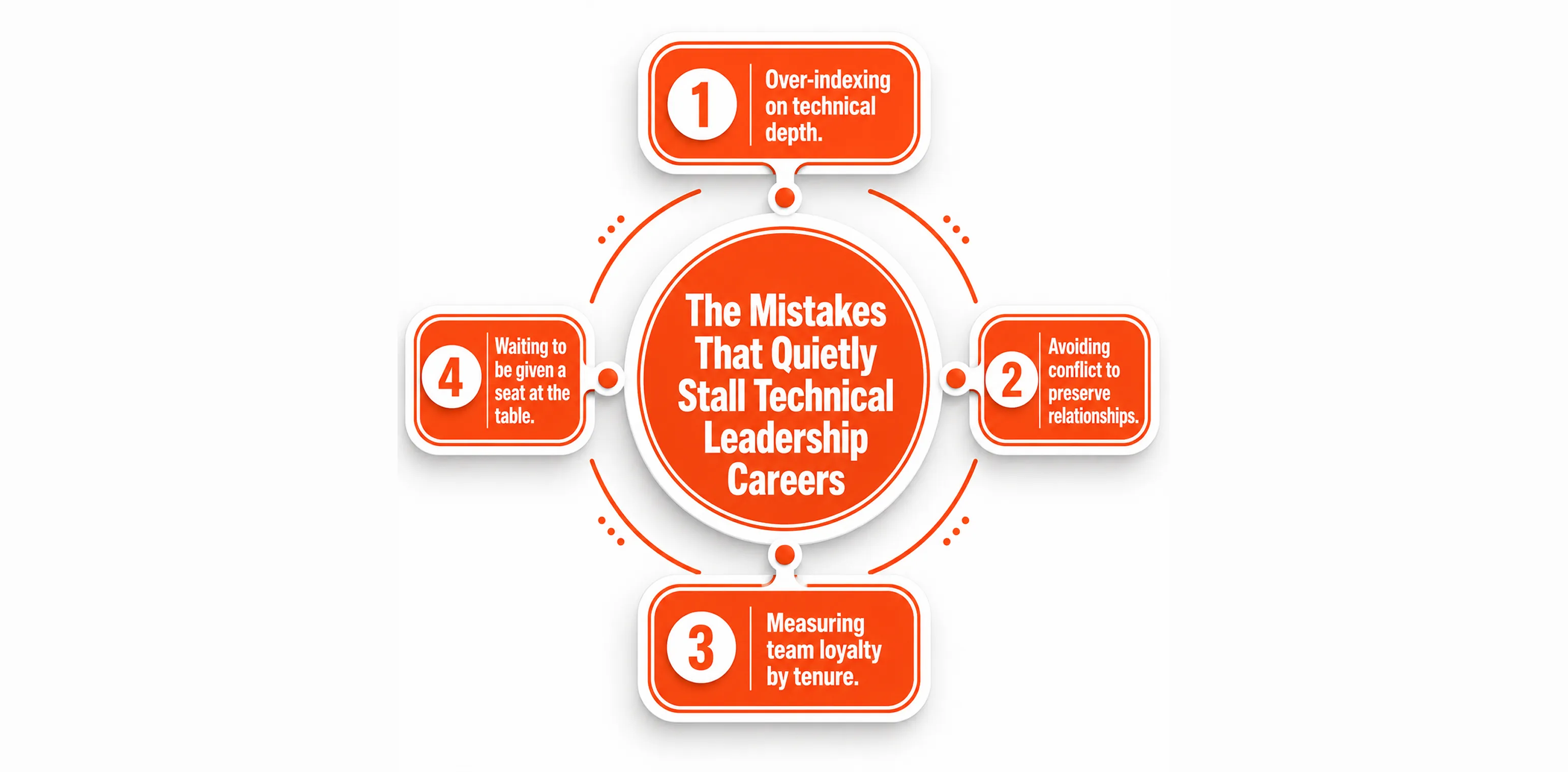
Over-indexing on technical depth — Spending more time in architecture reviews than in business conversations signals you are an expert, not a leader.
Avoiding conflict to preserve relationships —Withholding a difficult recommendation to keep the peace costs more credibility than the disagreement would have.
Measuring team loyalty by tenure — Keeping underperformers because they have been around longest limits the ceiling of everyone above them.
Waiting to be given a seat at the table —In most organizations, technical leaders earn strategic influence by demonstrating business judgment, not by waiting for an invitation.
Conclusion
Technical leadership in 2026 is not defined by what you know about technology. It is defined by what you deliver for the business, how you develop the people around you, and how clearly you lead when the organization needs direction.
The leaders excelling in technical leadership roles today are those who have made this shift intentionally and completely. They are not the best engineers in the room. They are the clearest thinkers, the most credible communicators, and the most disciplined deliverers of business outcomes.
That is the standard. And it is achievable.
Looking to strengthen technical leadership across your data and technology function? Schedule the call with Complere Infosystem.