The Role of CTOs in Navigating AI, ML, and Automation
- Jun 10, 2025
- Isha Taneja
Explore the vital role of CTOs in leveraging AI, ML, and automation for innovation, growth, resilience in today’s tech-driven business world.

Explore the vital role of CTOs in leveraging AI, ML, and automation for innovation, growth, resilience in today’s tech-driven business world.

Imagine a ship sailing through turbulent digital waters. Who’s standing at the helm, steering the wheel, ensuring the vessel doesn’t hit icebergs of outdated technology? That’s your Chief Technology Officer (CTO).
A CTO is the strategic captain of technology in an organization. They bridge the gap between business goals and technological execution. From software choices and infrastructure to innovation and future-proofing, the CTO wears many hats. Their decisions affect not just IT but the very heartbeat of the company’s growth, scalability, and competitive edge.
Artificial Intelligence (AI) is not science fiction anymore. Think of AI as a smart assistant that can mimic human intelligence—learning, reasoning, and even problem-solving. From Netflix recommending your next binge-worthy show to Siri understanding your voice, AI is woven into daily life.

It involves various subfields like natural language processing, computer vision, and machine reasoning, enabling machines to do tasks that once required human intelligence.
Machine Learning (ML), a subset of AI, is the brain that learns from data. It’s like a student who keeps learning without being explicitly taught. ML systems identify patterns in large datasets and make decisions or predictions.
Think of your email inbox filtering spam, or your favorite e-commerce site suggesting products. That’s ML in action. It’s the reason businesses can personalize customer experiences, forecast trends, and automate complex decisions.
Automation is like hiring a tireless worker who never sleeps. It’s the use of technology to perform tasks with minimal human input. This includes robotic process automation (RPA), software bots, and automated workflows.
Imagine invoices being generated, emails sorted, or inventory managed without human intervention. That’s automation, streamlining operations, saving costs, and boosting efficiency.
In 2023, 92% of Fortune 1000 companies reported increasing their AI investments, while 81% adopted some form of automation in business processes. But here’s the twist: only those with visionary CTOs managed to harness these technologies effectively.
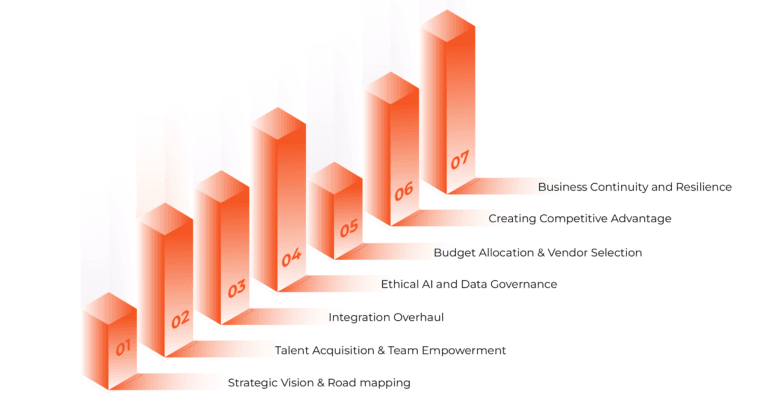
Let’s dive into how a CTO orchestrates this digital symphony.
Meet Arjun, CTO of a mid-sized logistics firm. Faced with rising operational costs, he proposed an ML-based demand forecasting tool. By identifying high-demand routes and streamlining fleet management, the company reduced fuel consumption by 18% and increased delivery efficiency by 26%.
CTOs define a roadmap—balancing innovation with practical ROI. They select the right AI or automation tools to align with business goals.
Without the right people, even the best tech is useless. CTOs scout and nurture talent in AI/ML. Think of Netflix’s CTO, who built a team of 300+ data scientists and engineers to perfect its recommendation engine, which contributes to over 80% of watched content.
Automation isn’t plug-and-play. CTOs must integrate new systems with legacy software. Take the example of a healthcare startup led by CTO Maria. She unified patient data across multiple platforms using AI-driven APIs, reducing appointment scheduling errors by 70%.
With great power comes great responsibility. CTOs ensure AI doesn’t become a black box. They implement ethical standards and data governance policies. For instance, Google’s CTO introduced an AI ethics board to scrutinize all major deployments.
Not all shiny tools are gold. CTOs vet AI and automation vendors based on scalability, security, and value. They negotiate costs and allocate budgets wisely—saving millions in potential wastage.
CTOs aren’t just implementers; they’re innovators. IBM’s CTO introduced Watson, an AI system that now powers customer service across sectors. This transformed IBM from a service provider to a tech innovator.
During the 2020 pandemic, many companies floundered. But CTOs with robust automation systems ensured operations continued smoothly. An example? A retail chain led by CTO Rebecca leveraged AI chatbots and automation to manage online orders during lockdowns—resulting in a 32% sales increase.
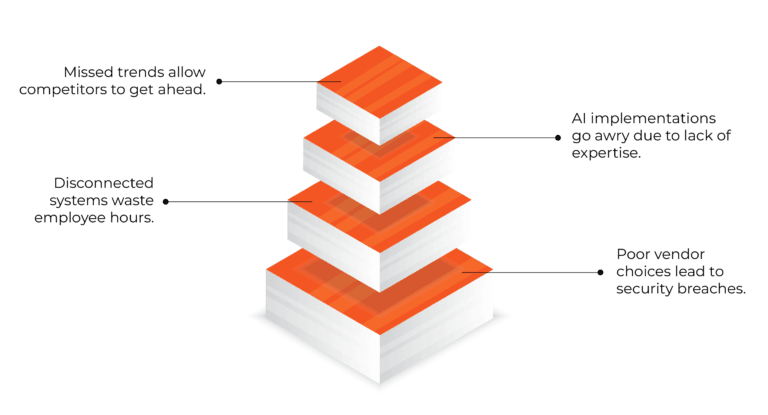
Imagine a startup trying to scale its SaaS product without a CTO. The CEO is overwhelmed, the tech team is fragmented, and tools are outdated. Here’s what typically happens:
Metric | With CTO | Without CTO |
AI Project Success Rate | 87% | 45% |
Time to Implement Automation | 6 months | 14 months |
Customer Satisfaction Growth | +29% | +8% |
Security Breach Incidents | 1/year | 5/year |
Innovation Index Score | 8.7/10 | 4.3/10 |
These numbers tell a story. CTOs aren’t optional—they’re critical.
In a world driven by AI, ML, and automation, CTOs are not just tech leads—they are growth architects, innovation champions, and the ethical compass of technology. They turn disruption into opportunity.
From strategic foresight to hands-on execution, a great CTO aligns technology with the pulse of business. The companies that invest in visionary CTOs are the ones that lead, innovate, and dominate.
Love stories that combine technology, leadership, and innovation?
Stay tuned for our upcoming series featuring:

Listen in for business strategies and interviews with business experts to help you build a business and a life that you love.
About Us