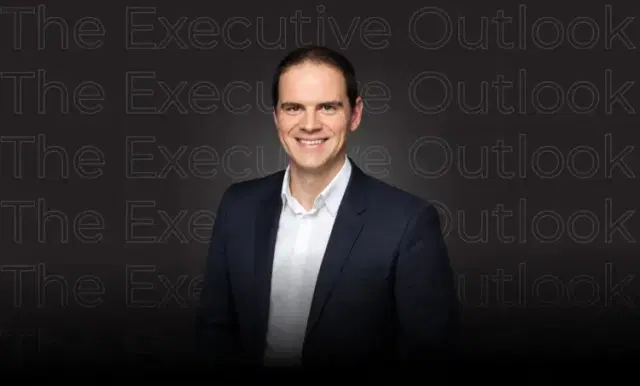
During a recent conversation on The Executive Outlook, Isha Taneja spoke with Robert Goodwin, Chief Data Officer at MSQ Global and CEO of MSQ Data. His approach to data and AI reflects the mindset of someone who has spent years operating at the intersection of marketing, analytics, and business growth.
Robert does not treat data as a reporting layer or AI as a passing technology trend. Instead, he views them as parts of a single operating system that modern organizations rely on. That system must be reliable enough to support growth, measurable enough to justify marketing investment and structured enough to turn insights into action.
In Robert’s view, strong systems are the foundation of modern marketing. When those systems work well, teams can move faster, test ideas more confidently and make decisions based on real evidence rather than assumptions.
This perspective shapes his work today. Leading analytics, marketing technology and data initiatives across multiple agencies within the MSQ Global network, Robert focuses on building environments where insight and execution work together.
The conversation explored how his journey into data analytics leadership, his practical use of AI in marketing analytics and his belief in building strong marketing data strategy are helping organizations navigate the next phase of digital transformation.
Robert’s career began with a fascination for mathematics.
Numbers came naturally to him. Patterns, logic and structured thinking made sense in a way that felt intuitive. Like many people with strong mathematical skills, he could easily have pursued a traditional career in finance or banking.
But Robert’s curiosity extended beyond numbers alone. He was interested in how organizations function and how decisions are made inside complex business environments.
This curiosity eventually led him toward analytics roles connected with marketing.
Once he entered that space, Robert began to see marketing in a different way. It was not simply about creative messaging or brand campaigns. Behind every campaign was a system of signals that revealed how audiences behave, what drives engagement and which strategies generate meaningful results.
Data offered a way to understand those signals.
This realization became the starting point for Robert’s long-term approach to marketing data strategy. Instead of seeing analytics as an isolated reporting function, he began viewing it as a tool that could shape how organizations think, plan and grow.
As Robert’s career progressed, he worked with major organizations including Sky and British Airways. These experiences exposed him to the realities of operating data environments at a scale.
Large organizations generate enormous amounts of information every day. Marketing campaigns, digital platforms, customer interactions and operational systems all produce streams of data.
Yet having access to vast amounts of data does not automatically create clarity.
Robert observed that many organizations struggled with fragmentation. Data existed in multiple systems. Different teams relied on different definitions and reporting structures. As a result, leadership teams sometimes found it difficult to trust the numbers they were seeing.
These experiences reinforced an important lesson.
The challenge for most organizations is not collecting more data. The real challenge is building systems that allow data to be trusted, interpreted and used to guide decisions.
That principle continues to shape Robert’s thinking today.
Robert’s move into the agency world expanded his perspective even further.
Working across agency environments connected to organizations such as M&C Saatchi and WPP, he encountered a wide variety of marketing and analytics challenges. Each client had different goals, different systems and different levels of data maturity.
Some companies needed help understanding their customers. Others required stronger marketing technology platforms. Many struggled to connect creative campaigns with measurable business results.
This variety allowed Robert to develop a holistic understanding of the marketing ecosystem.
He worked across projects involving data strategy, analytics implementation, segmentation, marketing technology enablement and the next best action frameworks. Over time, he learned how to connect technical infrastructure with creative and commercial goals.
That combination of experience eventually led him into senior leadership roles.
Today, as Chief Data Officer at MSQ Global and CEO of MSQ Data, Robert oversees analytics, marketing technology and product enablement across approximately thirteen agencies within the MSQ Global network.
Despite this scale, he still describes himself as someone who remains closely connected to the work.
Robert believes effective data analytics leadership requires leaders to stay connected to the operational realities of their systems.
Many executives eventually move away from technical environments as their responsibilities grow. Robert has chosen a different path.
He continues to pay attention to analytics infrastructure, workflow design and the technical foundations that support marketing systems. Staying close to these details helps him understand what teams need in order to deliver meaningful outcomes.
Another key element of his leadership philosophy is the importance of building specialist teams.
In Robert’s view, solving complex analytics challenges requires experts who deeply understand their craft. Data engineers, marketing technologists and analytics specialists each bring different skills that contribute to a strong system.
When these specialists collaborate effectively, organizations gain the ability to turn complex data environments into practical business insights.
Artificial intelligence is now influencing nearly every area of marketing.
Robert believes the real opportunity lies not in talking about AI, but in integrating it into practical workflows.
At MSQ Global, AI in marketing analytics is embedded into the full cycle of campaign development and performance analysis.
Robert described a project involving a UK client in the automotive recovery and insurance sector.
In this environment, AI supports the creative briefing process by helping teams generate initial concepts and variations. Instead of starting with a single campaign idea, teams can explore a wider range of possibilities quickly.
These creative outputs are then refined by human teams who ensure that the messaging aligns with brand tone and campaign objectives.
Once the assets are deployed across CRM channels such as email and push notifications, campaign performance data flows back into analytics dashboards.
These dashboards measure engagement, identify high-performing creative assets, and help teams understand how customers respond to different messages.
Visual AI tools assist by highlighting patterns within campaign performance, allowing teams to interpret results more quickly.
Insights from these dashboards then guide the next round of campaign development.
This continuous loop connecting creative production, analytics feedback and strategic refinement allows marketing teams to learn and improve faster.
Despite the increasing capabilities of AI, Robert emphasizes that human expertise remains essential.
AI can generate ideas, automate processes and analyze data quickly. However, people provide context and judgment that technology cannot replicate.
Creative professionals understand tone, storytelling and brand identity. Marketing leaders understand customer sentiment, market conditions and business priorities.
By maintaining a human in the loop approach, organizations ensure that AI accelerates their work without compromising quality or trust.
Robert believes this balanced approach is critical as AI systems become more integrated into marketing operations.
One of the greatest advantages AI brings to marketing teams is the ability to experiment more frequently.
Traditional campaigns often rely on a limited number of creative variations because producing and testing each version requires significant resources.
AI allows teams to generate and evaluate many more variations quickly.
This increase in experimentation creates more opportunities to learn from real customer behavior.
Robert views this experimentation driven mindset as central to modern marketing data strategy. Instead of relying solely on historical performance or intuition, organizations can gather real time evidence about what resonates with their audiences.
The result is a more adaptive marketing system where strategies evolve continuously based on new insights.
Another theme in the conversation was the rise of AI discoverability.
As consumers increasingly interact with large language models and AI-driven search tools, the way information is discovered online is changing.
These systems gather knowledge from a wide range of sources including websites, video platforms, community forums and knowledge bases.
Robert noted that not all AI systems rely on the same data sources. Some prioritize video content, while others draw heavily from community discussions or third-party knowledge repositories.
Because of this, organizations must broaden their digital presence.
Traditional search optimization remains important, but businesses must also ensure their content appears across the wider digital ecosystem where AI models gather information.
Publishing structured content, maintaining presence on platforms like YouTube, Reddit and ensuring accurate information across knowledge networks all contribute to stronger discoverability.
When asked what early stage companies should focus on when building their analytics capabilities, Robert offered practical guidance.
Start with the fundamentals.
First, founders should understand their market environment and define clear marketing objectives.
Second, they should measure awareness and engagement to understand whether campaigns are reaching the intended audience.
Third, they must track conversions to determine whether marketing activity is generating meaningful business results.
Tools such as Google Analytics and tag management platforms provide the basic infrastructure required for these insights.
Once these foundations are in place, organizations can gradually introduce more advanced analytics models.
Robert also discussed the importance of building strong data architecture.
Platforms such as Snowflake, Databricks, AWS and Google Cloud provide powerful infrastructure for managing data environments. However, Robert believes the most important factor is how data is structured within these platforms.
Organizations benefit from layered data systems where raw data enters the environment, moves through transformation processes and eventually becomes business ready information.
Another increasingly important component is the semantic layer.
This layer allows analytics tools and AI systems to interpret data consistently, making it easier to connect insights with operational decisions.
When data architecture is designed thoughtfully, both humans and machines can interact with information more effectively.
As AI systems become more integrated into business processes, governance and security must evolve as well.
Robert believes that modern cloud environments provide strong infrastructure protection. However, governance remains essential for ensuring that data is used responsibly.
Organizations must monitor how data flows through AI systems and ensure that sensitive information remains protected.
This requires clear policies, workflow controls and ongoing oversight by experienced teams.
By combining strong governance with technological capability, businesses can adopt AI confidently while maintaining trust.
Robert Goodwin’s journey reflects the broader transformation happening across the marketing and analytics landscape.
From his early fascination with mathematics to his leadership role guiding data initiatives across global organizations, his career illustrates how analytical thinking can evolve into strategic leadership.
The insights he shared during this conversation highlight a central truth about modern business.
Data and AI do not create transformation on their own. Transformation happens when organizations connect technology, strategy and people in ways that lead to better decisions.
Strong data analytics leadership, thoughtful use of AI in marketing analytics and a well-structured marketing data strategy allow businesses to turn complex information into meaningful action.
As digital ecosystems continue to evolve, these capabilities will become even more essential.
For leaders navigating the future of marketing and analytics, Robert Goodwin’s perspective offers a valuable reminder that technology matters most when it helps organizations learn faster, adapt more quickly, and serve their customers better.
Subscribe to The Executive Outlook and stay updated on the latest conversations with leaders shaping the future of data and AI.


Listen in for business strategies and interviews with business experts to help you build a business and a life that you love.
About Us