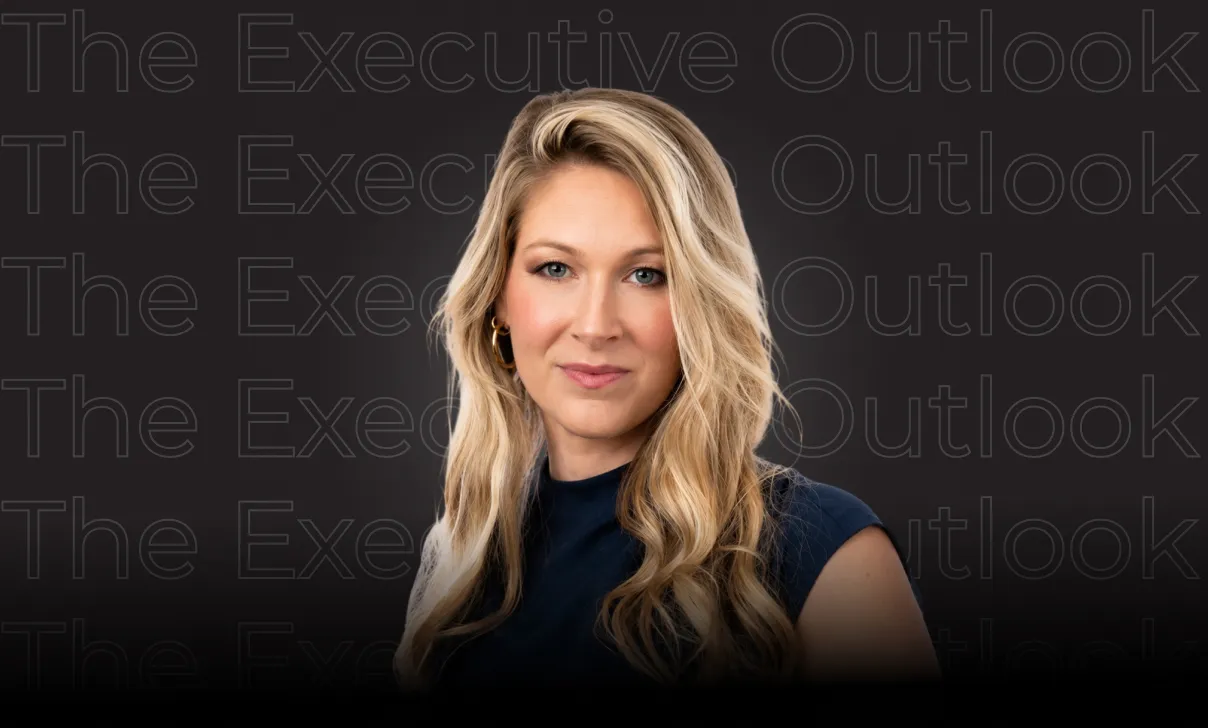
Rebecca Matulonis shares how organizational growth strategy depends on strong foundations, leadership alignment, people-first processes, KPIs and execution.
The most dangerous moment in any organizational growth strategy is not always when things are going wrong. Sometimes, it is when things move too fast. Speed can create confidence. Confidence can create assumptions. And when assumptions replace the foundational work that should have come first, cracks begin to appear.
Teams become confused. Processes stop working. Leaders move in different directions. And suddenly, the same growth that once looked exciting starts creating pressure the organisation is not ready to carry.
Rebecca Matulonis has spent her career working close to these moments.
As an operations and growth leader with experience across healthcare, real estate and advisory roles, she has stepped into companies where vision needed structure, teams needed clarity and strategy needed execution. What makes her perspective valuable is not only her experience as a leader, but the way she sees operations.
For Rebecca, operations is not just about processes, checklists, or systems. It is a leadership discipline. It is the part of the business that turns vision into reality. It is where ideas become actions and actions become measurable in progress.
Her message is simple but powerful: if the foundation is weak, growth will eventually become unstable.
Rebecca did not begin her career with a plan to become an operations leader.
She started in human resources and later moved into operations almost naturally. She describes it as something she “fells into,” not something she had originally mapped out.
“I like to build, I like order, I like process,” she shared during the conversation. “It always came naturally to me.”
But what makes Rebecca’s journey interesting is that she did not feel like the typical operations leader. She was outgoing, expressive and people oriented. Growing up, she was often told she talked too much. At first, that made her feel different from the usual image of an operations professional, someone people often imagine as quiet, structured and behind the scenes.
Over time, she realised that this difference was actually one of her strengths.
Operations are not only about building systems. It is also about understanding people. It is about observing how they work, helping them accept change and creating processes they actually want to follow. Her people-focused personality helped her bridge the gap between structure and human behaviour.
That balance became central to her leadership style.
Many organizations create strategies. Fewer organizations build what is needed to execute them properly.
This is where Rebecca believes operations plays its most important role. A company may have a strong vision, a clear ambition and a motivated leadership team. But without the right systems, processes and team alignment, that vision remains only an intention.
Rebecca’s career has shown her that operations is not separate from strategy. It is the mechanism that makes strategy practical.
A CEO may decide where the company should go. But the operational leader helps answer the harder question: how will we actually get there?
That includes creating processes, identifying gaps, building accountability, setting goals, measuring progress and making sure teams understand what needs to happen next.
In Rebecca’s view, a good organizational growth strategy cannot live only in leadership meetings. It must be translated into daily work.
She has worked across different industries, including healthcare and real estate. Each industry has its own challenges, expectations and working style. But according to her, the basics of operations remain transferable.
Standard operating procedures, process design, team communication, accountability and measurement matter everywhere.
What changes the environment is.
In real estate, for example, teams may include a mix of independent contractors and full-time employees. That changes how processes are introduced and followed. A process that works for a traditional employee structure may not work in the same way for contractors.
In healthcare, operational clarity often carries a different level of responsibility because processes affect service delivery, team coordination and the quality of decisions.
But across industries, Rebecca returns to the same principle: a process only works if people can understand it, accept it and follow it.
A detailed process that nobody uses is not a process. It is just a document.
When Rebecca talks about building effective SOPs, she does not begin with templates.
She begins with observation.
“The first thing you have to do is observe,” she explained.
Before changing anything, she watches how people already work. She looks for patterns, gaps, shortcuts and repeated behaviors. Often, the most important operational problems are not visible in reports. They appear in the small daily habits of a team.
Maybe people are skipping a step because the process is too complicated. Maybe two teams are doing the same work in different ways. Maybe employees have created informal workarounds because the official system does not support their reality.
She believes leaders must understand these patterns before designing new processes.
This is an important lesson for any organisational growth strategy. Leaders cannot build strong systems from assumptions. They need to understand what is actually happening on the ground.
Once they observe clearly, they can design processes that make people’s work easier, not harder.
She is direct about one thing: even the best process will fail if people do not believe in it.
“You have to make sure they have buy-in,” she said. “If they’re not excited about the process, they’re not going to engage.”
This is one of the most practical insights from her conversation.
Many leaders think process adoption is about instruction. She sees it differently. For her, adoption is about trust, belief and communication.
People need to understand why the process matters. They need to see how it helps them. They need to believe the change is being introduced for the right reasons, not just as another layer of control.
That is why she believes leaders must “sell the story” behind the change.
This does not mean making false promises. It means explaining the purpose clearly. It means helping people see the connection between the process, their work and the company’s larger goals.
When people understand the story, they are more likely to support the system.
Rebecca also points out that building a process from scratch can sometimes be easier than changing an existing one.
When there is no process, leaders have a blank page. They can define the system, introduce expectations and bring everyone along from the beginning.
But when a process already exists, change becomes more difficult.
People get used to the way things are. Even if the old process is inefficient, it still feels familiar. Changing it can create discomfort, resistance and uncertainty.
She believes this is where leadership matters most.
The goal is not to force change. The goal is to help people trust the direction and trust the leader guiding them through it.
If employees believe in the person leading the change, they are more likely to stay open to the process.
One of Rebecca’s strongest leadership insights is about the relationship between the CEO and COO.
According to her, the CEO’s biggest responsibility is vision and direction. The CEO must help the company understand where it is going and what it is working toward.
Without that clarity, people may still work hard, but they may not work in the same direction.
The COO’s responsibility is execution. The COO takes the strategy and builds the structure needed to make it happen.
She explained it clearly: if there is no strong vision, execution has no direction. But if there is no strong execution, vision remains meaningless.
Both roles matter. Both carry serious responsibility. And both must work together.
This is where many companies struggle. They do not always fail because they lack talent or ambition. They fail because leadership is not aligned.
Across her advisory work, She has seen one challenge appear again and again: lack of alignment at the leadership level.
Sometimes two or three leaders all have different ideas about the company’s best direction. Each person may be intelligent, experienced and committed. But if they are not aligned, the organization feels confused.
Teams receive mixed signals. Priorities shift. Decisions slow down. Execution becomes harder.
She believes that before a company can execute well, leadership must agree on the strategy, direction and priorities.
This is not always easy. Leaders often come with strong opinions and different perspectives. But without alignment, the rest of the organization struggles to move with confidence.
A strong organizational growth strategy does not begin with activity. It begins with clarity.
She also highlighted the value of advisors in today’s business environment.
Her view is simple: when leaders are too close to something, they may not see everything clearly.
This happens in almost every organization. Leaders are involved in daily work, pressure, history and the internal dynamics. Because of that, some problems become normal to them. Some gaps become invisible.
An outside advisor brings distance.
They can ask questions that internal teams may avoid. They can notice patterns that leadership has stopped seeing. They can help teams step back and look at the business with fresh eyes.
She has seen leaders respond with surprise when she points something out because they had not considered it before.
That outside perspective can be valuable, not because the advisor knows everything, but because they are not trapped inside the same daily routine.
If there is one lesson that runs through Rebecca’s entire philosophy, it is the importance of foundation.
She has seen what happens when companies try to grow without building the right base first.
Visionary leaders often want momentum. They want to move quickly. They want to see the idea become real as soon as possible. That energy is important, but it can also create risk.
She believes the operations leader often has to slow the conversation down just enough to ask: what needs to be built first?
What systems are missing?
What expectations are unclear?
What processes need to exist before we scale?
What data will tell us whether we are succeeding?
This can create tension between vision and operations. But that tension is not always negative. When handled well, it protects the company.
A strong foundation allows the vision to grow without collapsing under pressure.
She is also clear that strategy must be measured.
Many companies create goals but do not define how success will be tracked. That creates a serious problem. Without data, leaders cannot know whether they are moving in the right direction.
“If you don’t have data, how are you going to see where you are, where you should go and where you should pivot?” She asked.
For her, KPIs are not just reporting tools. They are decision-making tools.
She shared a simple example. Suppose a company wants to gain 100 new customers in one year. The CEO may set up the vision, but the COO must break it down into measurable steps.
What should happen in three months?
What should happen in six months?
How many outreaches are needed?
What conversion rate is expected?
What should be reviewed every month?
This turns a broad goal into an actionable plan.
More importantly, it allows leaders to catch problems early. If the team is behind after one month, they can adjust instead of waiting until the end of the quarter or year.
Measurement gives leaders the power to improve before it is too late.
Another important point Rebecca makes is that leaders should not become too rigid with their strategy.
A strategy may be right at the time it is created. But industries have changed. Markets change. People change. Customer expectations change.
If leaders refuse to reassess, even a good strategy can become outdated.
She believes leaders should review their processes and strategy regularly, at least once a year. They need to ask whether the current approach still supports the company’s vision and goals.
This mindset keeps the organization flexible.
It also prevents stagnation. Growth does not come from blindly following a plan. It comes from measuring honestly, learning quickly, and adjusting when needed.
When asked about her proudest achievement, She did not point to a company milestone or business result.
She talked about people.
For her, one of the greatest achievements of leadership is creating environments where other leaders can grow. She calls this “leadership that multiplies.”
This idea captures the human side of her operational philosophy.
Strong operations are not only about systems. They are about people becoming better inside those systems. They are about younger professionals gaining confidence, learning responsibility and growing into leaders themselves.
For Rebecca, that is the kind of legacy that lasts.
A company can build processes. It can hit targets. It can grow revenue. But if it also develops leaders along the way, the impact becomes much deeper.
Her perspective is a reminder that growth is about moving faster.
It is about moving with clarity.
A strong organizational growth strategy needs vision, but it also needs execution. It needs processes, but it also needs people to believe in them. It needs goals, but it also needs KPIs to measure progress. It needs ambition, but it also needs a foundation.
The companies that grow well are not always the ones that rush the fastest. They are the ones that build carefully enough to carry the weight of their own vision.
Rebecca’s leadership lesson is clear: build the foundation first, align the people, measure honestly and keep adapting.
That is how strategy progresses.
That is how operations become leadership.
And that is how organizational growth becomes sustainable.
For more conversations with leaders shaping the future of strategy, operations and business growth, stay connected with The Executive Outlook.

Listen in for business strategies and interviews with business experts to help you build a business and a life that you love.
About Us