Why Today’s CIOs Are More Than Just IT Heads
- Jun 18, 2025
- Isha Taneja
Modern CIOs lead strategy, innovation, and transformation—driving growth, aligning tech with goals, and shaping future-ready enterprises.

Modern CIOs lead strategy, innovation, and transformation—driving growth, aligning tech with goals, and shaping future-ready enterprises.

In today’s fast-moving digital economy, one role has evolved more than any other: the Chief Information Officer (CIO). From managing IT infrastructure to leading innovation and driving enterprise-wide transformation, CIOs have stepped out of the server rooms and into the boardrooms. They are no longer seen as just tech leaders but as vital architects of change.
According to a 2024 Gartner survey, 84% of CIOs reported that their role has become more strategic over the past three years (Gartner CIO Agenda 2024). They are now expected to align digital strategies with business goals, manage change across departments, and ensure resilience in a volatile market.
Let’s explore the journey of digital transformation through the leadership lens of CIOs at Deloitte and how Complere Infosystem is setting new standards.
Once confined to managing networks and troubleshooting software, CIOs now shape strategic direction. The shift is backed by research: a McKinsey report found that technology-driven business model changes now account for over 50% of C-suite discussions (McKinsey Digital 2023).
Year | Strategy | Operations |
2019 | 30% | 70% |
2022 | 50% | 50% |
2024 | 65% | 35% |
This data underlines the shift: CIOs are now business leaders first and technologists second.
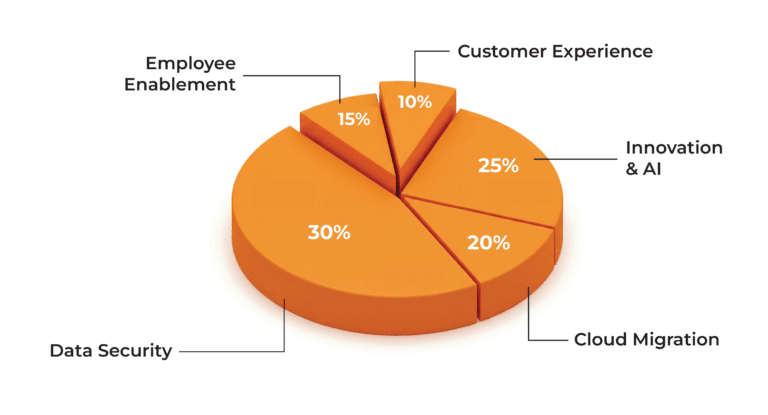
Deloitte’s Digital DNA program has become a benchmark. With over 65,000 employees trained in agile and digital tools, the company saw:
(Source: Deloitte Digital DNA Study)
CIOs partnered with HR and marketing departments, emphasizing that transformation is both a tech and people process. Their CIO-led innovation labs contributed to the firm being recognized in Forrester’s Digital Transformation Leaders 2023.
At Complere Infosystem, CIOs are not only leading internal innovations but also co-creating transformation journeys for clients across industries.
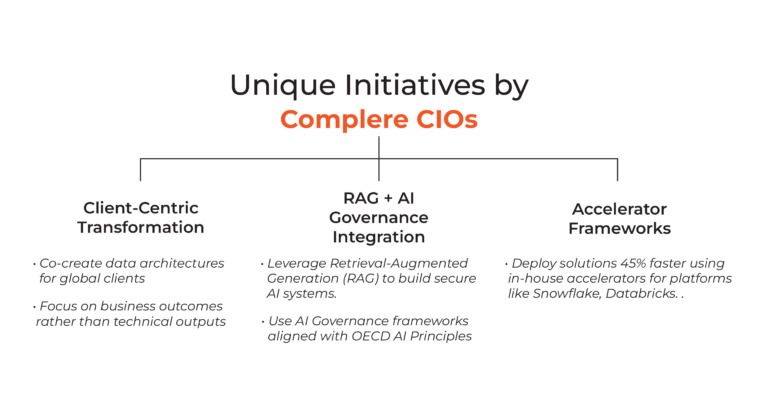
1.Client-Centric Transformation:
a. Co-create data architectures for global clients.
b. Focus on business outcomes rather than technical outputs.
2. RAG + AI Governance Integration:
a. Leverage Retrieval-Augmented Generation (RAG) to build secure AI systems.
b. Use AI Governance frameworks aligned with OECD AI Principles
3. Accelerator Frameworks:
a. Deploy solutions 45% faster using in-house accelerators for platforms like Snowflake, Databricks.
“Being a CIO today is about leading trust. We don’t just deliver systems—we deliver confidence, ethics, and foresight.”
Metric | Improvement |
Time-to-market | 45% Faster |
Client Satisfaction Score | 4.9/5 |
Security Incidents | Zero |
Both Deloitte and Complere understand that successful transformation hinges on leadership mindset. While Deloitte’s CIOs champion internal enablement, Complere’s CIOs extend transformation beyond the organization.
Harvard Business Review found that 70% of digital transformations fail due to lack of leadership and cultural readiness (HBR Digital Transformation Research 2023). Complere tackles this with mentorship programs, client co-design workshops, and a cross-functional change management playbook.
From strategy to security, from ethics to execution, CIOs today wear many hats. Deloitte’s blueprint shows how CIOs can ignite internal agility, while Complere’s example illustrates how CIOs can become client-facing transformation drivers.
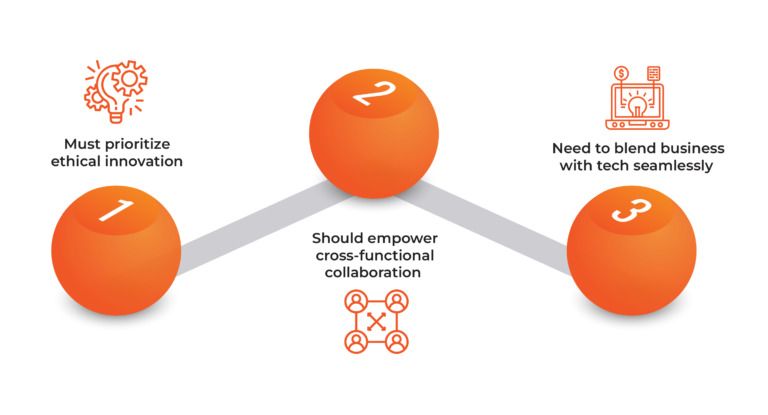
As the digital landscape evolves, only those CIOs who embrace this multifaceted role will be able to guide their organizations through uncertainty into opportunity.
“Digital transformation isn’t just about moving fast—it’s about moving smart. And CIOs are the guardians of that wisdom.”
Dear reader, looking for more informative and inspiring blogs on leadership, transformation, and AI? Subscribe now.

Listen in for business strategies and interviews with business experts to help you build a business and a life that you love.
About Us