
CEO Leadership Qualities for 2026: Metrics Mastery & Customer Impact
- Dec 22, 2025
- Isha Taneja
Let us learn core CEO leadership qualities for 2026, metrics mastery, customer impact, and responsible AI for data-led growth.

Let us learn core CEO leadership qualities for 2026, metrics mastery, customer impact, and responsible AI for data-led growth.

The expectations from CEOs are shifting fast. In the data-driven economy, leadership is no longer about bold speeches or top-down directives—it’s about clarity, precision, and the ability to turn data into outcomes that matter. The most critical CEO leadership qualities now revolve around understanding metrics deeply, making decisions rooted in evidence rather than instinct, and ensuring every strategic move translates into measurable value for customers. As AI adoption accelerates and business environments become more transparent, CEOs must become stewards of trust, accountability, and purposeful growth.
In 2026, CEOs leading data and AI-centric organizations will be evaluated on how well they can connect enterprise KPIs to human experience. Yes, the dashboards and performance models matter—but the interpretation, communication, and cultural alignment behind them matter more. This is where CEO leadership skills evolve: from simply approving strategies to shaping frameworks where teams understand why something is measured, how success is recognized, and where improvement is expected. A metric without meaning creates fear; a metric with narrative creates focus.
One defining shift is the CEO’s role in customer impact. Instead of viewing customers as market segments or revenue lines, modern CEOs view them as dynamic data signals—patterns that tell you how value is perceived in real time. Whether using AI to tailor product recommendations, streamline support, or personalize onboarding journeys, the CEO must ensure that technology amplifies empathy, not replaces it. The strongest CEO leadership traits today involve listening deeply to customer behavior, validating insights with clean data, and empowering teams to act on those insights with accountability—not pressure.
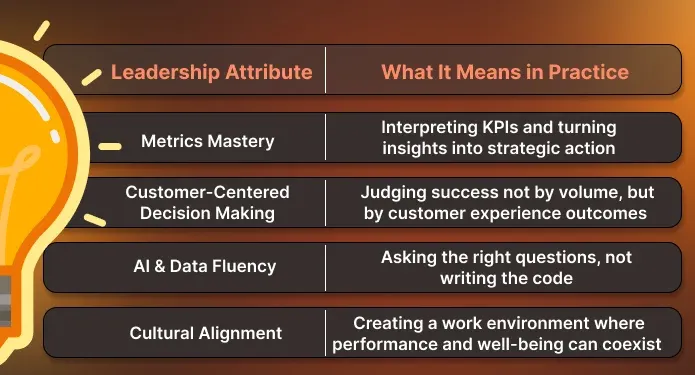
Work-life balance is no longer a luxury for executives; it is a leadership signal. A CEO who cannot regulate their own time, energy, and emotional responses cannot guide teams through complexity. Sustainable performance is now seen as part of CEO leadership qualities, because an exhausted leader breeds chaotic execution and short-term thinking. A grounded leader, on the other hand, models pace, reflection, and clarity—traits central to organizations that innovate responsibly.
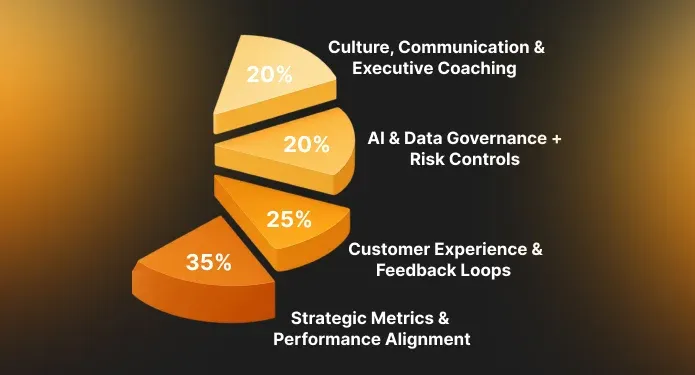
The future CEO is not the loudest voice in the room. They are the most aware:
They respect data without being ruled by it.
They understand that customer trust compounds.
They know culture amplifies execution.
The CEOs who will lead successfully in 2026 are those who master meaningful metrics and design organizations that create real customer impact. Their leadership is defined by grounded judgment, emotional steadiness, data fluency, and clarity of purpose. They cultivate trust—inside and outside their companies. And they prove, every day, that the smartest decisions are the ones that serve people, not just performance charts.
Want to develop leadership frameworks, KPI clarity, and AI-ready decision culture for your executive office?
Connect with The Executive Outlook and begin building the next-era CEO leadership playbook.


Listen in for business strategies and interviews with business experts to help you build a business and a life that you love.
About Us