Harpreet Khalsa explains how data leadership creates value through governance, AI readiness, business partnership, and faster decision-making.
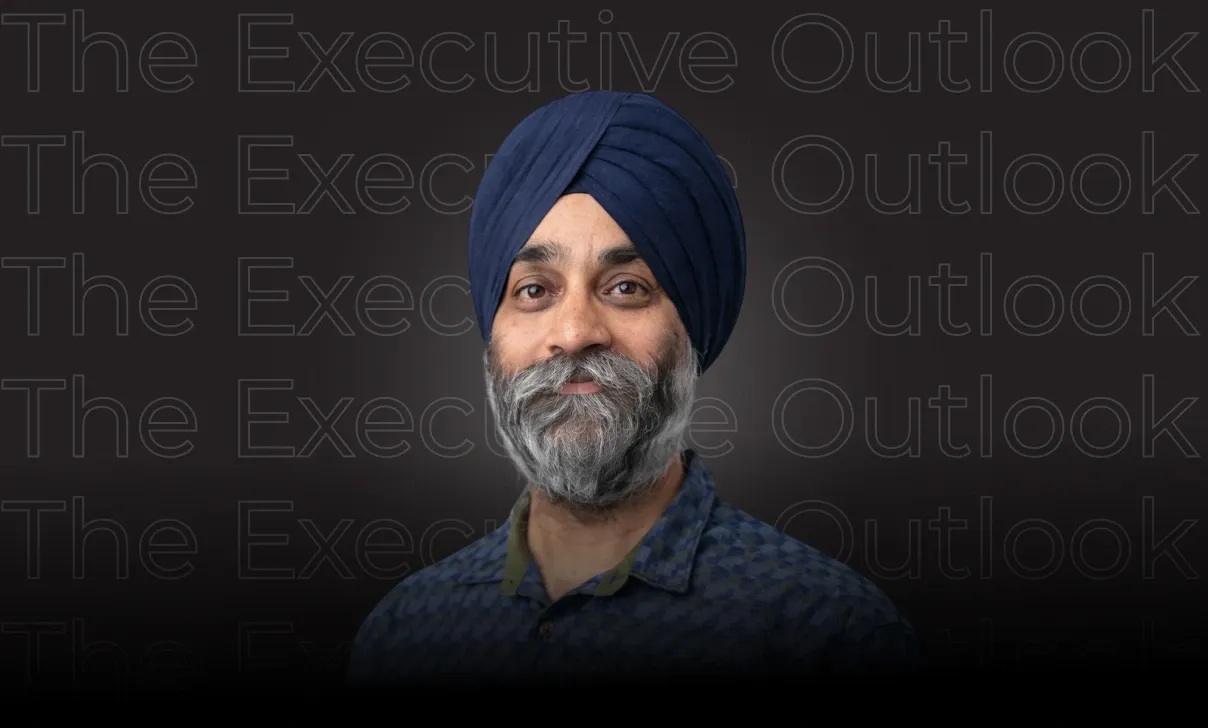
During a recent conversation on The Executive Outlook, Isha Taneja spoke with Harpreet Khalsa, Chief Data Officer at Edith Cowan University in Australia and co-author of The Data Playbook. Harpreet leads data governance, analytics, management reporting, and AI and his work has helped develop insight-driven culture that supports stronger planning and better operations across the university.
What stood out immediately was how practical his perspective was. He does not speak about data as a technical function sitting quietly behind the business. He speaks about it as a leadership function that must improve how an organization thinks, decides, and moves. In his view, the role of a data leader has moved far beyond producing reports. Today, it is about becoming a true business partner and using trusted data foundations to help leaders make faster, smarter, and accurate decisions.
That shift shaped the entire conversation. He reflected more than a decade of managing data in a university environment and explained how dramatically the role has changed, especially in the past five years. It is no longer enough to answer a request. Business leaders now expect velocity, quality, and diversity of insight. They assume the foundations should already be in place. Governance, reliable platforms, data models, warehouses, and AI capabilities are no longer the end point of the conversation. The real question now is whether the data team can help the organization operate better and make decisions with more confidence. That is where modern data leadership begins.
Harpreet described this evolution in a simple but powerful way. The journey began with the idea of creating a single source of truth. It then moved into building trusted enterprise data foundations. Today, it is increasingly about enabling business leaders to transform how the organization operates through data and AI. That progression matters because it moves the data function from support into influence. It changes the team from report producers into strategic partners.
He also framed challenges in a way that says a great deal about his leadership style. He does not dwell on obstacles as dead ends. He sees them as opportunities to learn, improve, and mature the function. One of the biggest opportunities, in his view, is the challenge of building a genuinely data-driven culture inside an organization. Technology can support that journey, but culture starts with people. It starts with finding the right champions.
For Harpreet, those champions matter at multiple levels. They are needed at the executive level because culture must be modeled from the top. They are also needed at the analyst level because day-to-day adoption happens close to the work. This is one of the clearest messages from the conversation. Data leadership is not only about systems, models, or platforms. It is about identifying people who can carry messages, influence behavior, and help others move with confidence.
One of the most thoughtful parts of the discussion came when we talked about people who may not yet look like obvious champions but still show ownership and responsibility. Harpreet’s answer was both practical and generous. Yes, existing stars matter. But people who show willingness to take responsibility deserve support too. In fact, he sees it almost as a duty of leadership to nurture them. That means helping them with training, providing them with access to the right support, and creating the conditions for them to grow into stronger contributors.
He was equally realistic about the people who do not step forward so quickly. Not everyone will lead from the front. Some will support once the direction becomes clear. Some will follow results that appear. Some will remain skeptical for longer than expected. He does not treat that as a failure. He believes leaders must keep doing what is best for the organisation, lead by example, and allow the broader culture to bring people along over time. He is not trying to force belief. He is trying to create momentum that becomes difficult to ignore.
He also spoke candidly about a challenge many leaders recognize but do not always discuss openly. People leave at critical points in delivery. That happens across organizations and across projects. His lesson from experience is not to pretend this can be prevented completely. Instead, he focuses on reducing the risk. That means keeping attention on broader outcomes rather than individual dependency. It means building trusted vendor partnerships, maintaining detailed documentation, working with external experts when needed, and ensuring knowledge is shared across the team so there is always a backup plan. It is a disciplined view of resilience, and it reveals a leader who is thinking beyond immediate execution.
Just as importantly, He stressed that this role can never become static. Data changes. Technology is changing. Business expectations have changed. Governance expectations change. For him, leadership in this space means continuously refining platforms, strengthening governance, improving analytics and AI capabilities, and constantly learning enough about the business to keep data work connected to real organizational needs. That mindset of continuous improvement quietly sits underneath everything else he shared.
When I asked what a real data journey looks like inside an organization, He gave one of the most memorable answers in the conversation. He said reality looks nothing like the version people often imagine. It is not a neat sequence of clean pipelines, orderly data warehouses, polished reports, and smooth AI capability. Real organizations are far more complex. Technology changes constantly. People need continuous training. Governance evolves. Data quality shifts. Business processes move. Compliance expectations change. Systems change. Even the way operational teams enter data into systems can change over time.
To explain that he used an analogy that stayed with me. Building a data journey is like building a refinery. Crude oil does not become useful on its own. First, the infrastructure must exist. Then the process must be defined. Only then can raw material be turned into something useful and meaningful. He sees data the same way. Raw data alone does not create value. It must be refined through process, capability, structure, and judgment before it can genuinely improve decisions. It is a powerful way to explain complex ideas in a simple language.
This is also why he believes that leaders should carefully select their battles. His advice is not to work on everything at once. Instead, look at the whole chain and identify the weakest link. He uses an example of a chain made mostly of steel but weakened by one plastic link. The real strength of the chain is not defined by the strongest parts. It is defined by the weakest point. So, each year, a leader must ask what part of the data chain is weakest now. Is it governance? Is it an AI capability? Is it people? Is it technology? That area should receive more focus, while the rest of the system continues moving forward. It is a disciplined and realistic approach to progress.
That same discipline appears in the way he thinks about prioritization. He warned against knee-jerk reactions to every time-sensitive request. Just because someone asks for something today does not mean it should instantly become the top priority. He believes leaders need to step back and ask why it matters, how critical it really is, whether it fits long-term organizational priorities, and what kind of return the organization will get from investing effort in it. This is where data leadership becomes executive leadership. It is not only about responding well. It is about choosing wisely.
When the conversation turned to current pain points, He offered an answer that felt especially timely. After many years on the journey, he said a lot of the traditional pain points at ECU have already been streamlined to a strong level. There is always room to improve, but many earlier challenges are no longer the major blockers they once were. AI, however, is different. AI has become a new pressure point.
What makes AI different, in his view, is not just that it is new. It is that the skepticism around it is deeper and more layered. In earlier reporting environments, people might doubt the data quality or the value of a specific output. With AI, the concern often begins before implementation starts. The skepticism is about the technology itself. Responsible AI, hallucinations, trust, governance, and the right fit for the organization all become part of the discussion before any real adoption happens. That creates a much steeper leadership challenge because the burden is no longer only on execution. It is also on interpretation, education, and timing.
Another important insight from this part of the conversation was the pace of change. New tools, new models, and new possibilities appear constantly. Something that looks promising today may look less attractive just a few weeks later. That creates a difficult question for leaders. Should they move now, or wait a little longer for an option that may be more accurate, more economical, or more stable? He captured this uncertainty clearly. It is not that the people around the leader are wrong. The market is moving so quickly that even beneficial instincts can become outdated very fast. That makes judgement one of the most valuable capabilities in AI leadership today.
The conversation became especially concrete when we moved into data governance. Harpreet’s advice here was direct and highly practical. Do not start the governance journey with technology. Do not assume governance is mainly a tech problem. That is one of the biggest mistakes organizations can make. At ECU, the journey did not begin with a platform. It began with a policy.
He explained that the university had already developed useful informal practices over time. People knew how to work with data owners and custodians when issues appeared. But as the organization grew and the data landscape became broader, it became clear that informal processes would not scale. This marked a significant shift. The university first established its data governance posture and formalized a governance policy with executive alignment. That policy did not try to govern every detail. Instead, it clarified how to treat data and how the institution should view it as an asset.
One of the smartest moments in that journey came when stakeholders pushed back on the idea of governing every single data element. Rather than treating that as resistance, the team used it as useful feedback. The result was the introduction of critical data elements. From there, they designed a framework to define what was critical based on usage, compliance, and financial value. Only after that did they formalize governance roles such as data executives, data owners, stewards, custodians, and assurers. Then names were mapped to those roles across different domains like student, HR, and finance. Only after all of that did technology enter the conversation.
That sequence says a great deal about Harpreet’s approach. Governance is first about posture, accountability, and clarity. Technology should enable that design, not substitute for it. By the time the team evaluated platforms, they already had documented requirements and dozens of data quality rules. They already knew what looked good. They knew what they wanted to test, how issues should escalate, and how the platform should support the model. That is a very mature way to buy and implement technology because the process is led by purpose rather than by features.
He also made an important distinction between the policy and the framework. The policy stays high level. It sets principles. It establishes that data is an asset, that critical data elements must be identified, and that those elements must be managed with quality and discipline. The detailed roles and responsibilities sit outside the policy in the broader governance framework. That clarity matters because it keeps governance both strategic and operational at the same time.
What happened next is what really turns governance from theory into practice. Harpreet and his team collaborated closely with the CIO to transform the delivery of new technology projects. Governance and data quality became part of those projects from day one. Roles were defined early. Data risks were considered early. Quality rules were automated early. As systems went live, governance and quality controls went live too. That approach created more work, but it also raised far more awareness. Over time, business stakeholders began to see governance not as a compliance burden, but as something that delivered real value. He noted with pride that some business presentations had even started to highlight the benefits they were getting from data governance. That is when governance becomes credible.
When we discussed dashboards and reporting, He offered a perspective that many traditional data teams may find challenging. He believes there should be fewer dashboards built by the central data team than most organizations assume. His preference is a strong self-service model in which the business has the autonomy to build many of its own dashboards. The job of the data team, in that model, is to provide high-quality data assets, documentation, glossary definitions, business rules, and the structure people need in order to use data properly.
This is not a withdrawal of responsibility. It is a more mature allocation of responsibility. He made it clear that his team still builds dashboards, especially genuine enterprise dashboards that involve multiple functional stakeholders and cannot sit comfortably within one area. But over the last few years, the team has deliberately reduced how much it builds directly, while training the business to do more for itself. That has created one of the clearest signs of success in his environment. Some of the highest-use dashboards are no longer built by the data team at all. They are built by businesses.
His reason for believing in this model is simple and compelling. Business users know exactly who needs the information, which questions keep coming up, and what decisions the dashboard is meant to support. When they build it, adoption becomes easier because ownership already exists. There is a sense of responsibility, but there is also pride. The people who build the dashboards help promote them, guide others to them, and reinforce their use in the flow of work. That solves a problem every organization knows too well. Too many dashboards get built, and too few get used. Harpreet’s answer is that adoption improves when business ownership improves.
The conversation ended with advice that feels simple but carries real strategic depth. He said new data professionals should stop confusing data with technology. The tools will constantly evolve. The platforms will evolve. But data, its structure, and its role in decision-making remain far more stable than most people realize. He encourages people entering the field to spend more time understanding why data is collected, what business decisions it supports, and how the quality and speed of those decisions can improve.
That may be the clearest expression of his philosophy. Business intelligence is not just a technical category. It is a promise. The purpose of the work is to make the business more intelligent by helping it make better decisions in less time. Once that becomes the focus, the rest begins to align. The dashboards, the technology, and the methods all start to make more sense because they are serving a sharper purpose.
What he ultimately offers is not just a view of how data functions should operate. He offers a view of how leaders should think. Build trusted foundations. Invest in people. Create champions. Choose priorities carefully. Treat governance as a leadership discipline, not a software purchase. Be thoughtful about AI. And never lose sight of the reason data matters in the first place. It matters when it helps people make better decisions.
In a time when many organizations still confuse motion with progress, that is a timely and valuable reminder. And for organizations ready to move from data ambition to real business impact, that journey begins with the right foundations, the right governance, and the right partner.
Connect with Complere Infosystem to build data systems that support smarter decisions. For more leadership insights from experts shaping the future of data, AI, and transformation, explore The Executive Outlook.

Listen in for business strategies and interviews with business experts to help you build a business and a life that you love.
About Us