How Transformational Leadership Can Inspire Others in 2026
- Feb 11, 2026
- Isha Taneja
Transformational leadership is redefining executive leadership. Learn the key characteristics & proven strategies that drive change.

Transformational leadership is redefining executive leadership. Learn the key characteristics & proven strategies that drive change.
A global pharmaceutical company was spending hundreds of millions on research. Yet its cross functional teams had no way to connect that data. The fix did not come from a new tool or a top/down mandate. It came when someone started asking one uncomfortable question:
“What decisions do you actually want to drive?” Within months, 100 people across Basel, New Jersey, and Hyderabad were trained on a repeatable methodology. The process ran 25 times internally. This is what transformational leadership looks like in practice, a permanent shift in how an entire organization thinks and operates.
Only 30% of employees worldwide feel engaged at work. 70% say their manager directly influences how they feel about the workplace.
It is a leadership style where leaders inspire and empower teams to perform beyond their own expectations, not simply manage output or issue directives. For any serious executive leader, understanding this is the most critical priority of 2026.
Remote and hybrid teams are now standard.AI adoption is accelerating. Employees want more than a paycheck, they want purpose and development. Transactional leadership, built on reward and punishment, is failing on all three fronts.
Leaders who actively build team capability drive up to 20% higher performance. Organizations with strong cross functional thinking adopt new technologies 2.5x faster. For CTOs evaluating AI readiness and CEOs planning long term strategy, this is not a soft skills conversation. It is a competitive advantageous conversation.
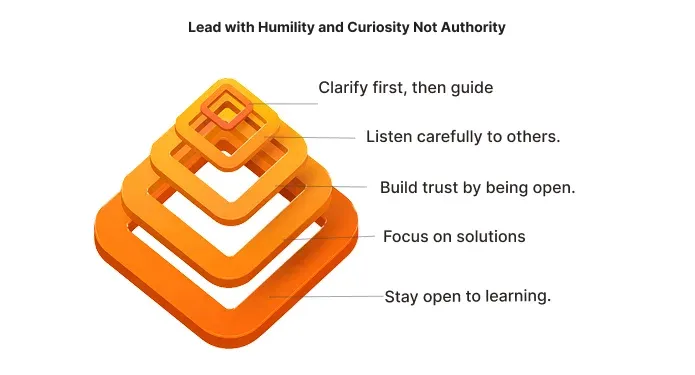
The Socratic method “All I know is that I know nothing” is not ancient philosophy. It is the most effective leadership tool available today. Leaders who master this mindset ask before they advise. They listen before they direct. Problems surface early. Trust builds fast. Blind spots disappear.
The best leaders leave something behind that works without them. They create repeatable frameworks, train others to run them, and share knowledge openly. In the pharma example above, the team did not stop at internal results. They published an academic paper turning a single engagement into industry knowledge. That is capability building on scale.
The most powerful decisions happen at the intersection of marketing, data, finance, and operations, not inside any single one. Such leaders do not just encourage collaboration. They architect it into how work gets done. Cross functional thinking is the foundation that makes AI adoption actually work.
Children naturally ask “why” thousands of times before they even start school. Somewhere along the way, that curiosity gets buried, replaced by pressure to deliver fast answers. Such leaders bring it back. They create cultures where asking a better question is valued more than giving a quick response. This is where real innovation starts.
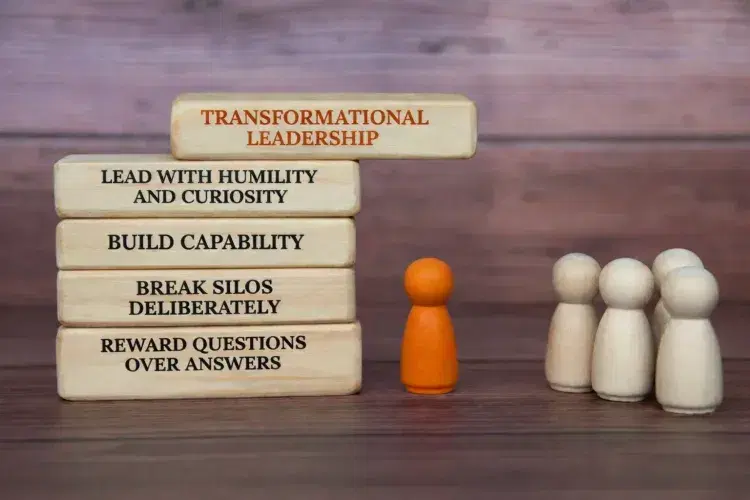
The pharma case study above shows all four characteristics working together. No single initiative drove the change. It was the combination humility, capability building, cross functional structure, leadership and a culture that rewarded curiosity, that created a permanent shift in organizational capability.
For leaders facing AI adoption, remote teams, or stagnant engagement, this is the approach that compounds. Not just this quarter. For years ahead.
Transformational leadership in 2026 is not about charisma or vision statements. It is about building organizations that think, adapt, and grow independently. The characteristics that define this style: humility, capability, collaboration, and curiosity are not optional. They are the differentiator between leaders who win this quarter and those who build lasting competitive advantage.
Is your organization truly AI ready or just talking about it? Reach out to us today and let’s find out.

Listen in for business strategies and interviews with business experts to help you build a business and a life that you love.
About Us