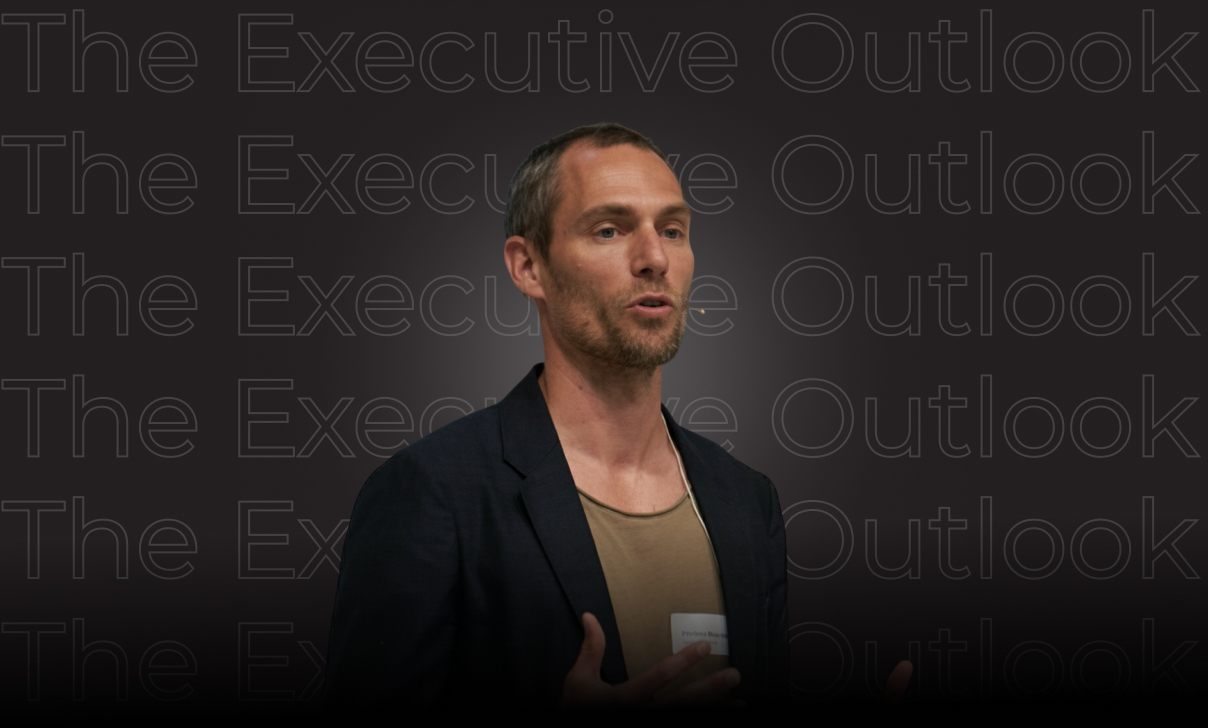
In this edition of The Executive Outlook, we feature Thomas Rosendahl, Chief Technology Officer at STARK Group, and a leader who has spent years at the intersection of technology, business and human habit. On paper, he is a product and technology leader. In practice, he is a clear example of transformational leadership—someone who believes real change does not start with code, it starts with understanding human behaviour.
His story is not about chasing buzzwords. It is about understanding how organizations think, how teams behave, and how to use technology in ways that actually show up in numbers and in how people work every day.
A Different Kind of CTO Journey
Thomas did not grow up as a hardcore engineer. He started in human factors and user experience design, asking questions like:
How do people use this?
Why do they behave this way?
“I know a little bit of coding,” he admits, “but I’m not as technical as many CTOs.”
The real turning point came when he worked closely with engineers and project managers and started asking:
“How do we actually get things built in a way that works for the business and the people using it?”
As mobile, cloud, and advanced analytics matured, he became fascinated by the intersection of what technology makes possible, how the business makes money, and how humans make decisions.
That intersection pulled him into leadership. Over time, he moved into roles where he wasn’t just shipping features; he was deciding which problems to solve and why.
“A lot of what it takes to transform companies is not about the perfect technology. It’s about understanding customers and business for technology to help drive change.”
Prefer to listen on the go? Tune in to the full podcast episode on Spotify below:
From Change to True Transformation
Thomas draws a clear line between change and transformation.
Change is when a company updates tools, processes, or systems.
Transformation happens when mindsets shift—when people start seeing technology as a core driver of value, not just overhead.
“Change updates systems. Transformation changes how people think,” he explains.
He has led many initiatives—from department-level programs to broader transformations. The ones that last are the ones where people understand why they are changing and how their work connects to the bigger picture.
When Tech Grows Up: Three Stages of Maturity
To explain how technology evolves inside companies, Thomas uses a simple three-stage model.
Group IT – “Tell Me What to Do”
- Tech is a service provider.
- The business writes requirements; IT delivers.
- Mindset: “Just tell me what to build.” Tech is reactive, not strategic.
Modern Tech Organization —Strong but Tech-Centric
- Cloud, microservices, new languages, agile, platform teams.
- Faster delivery, better engineering culture.
- But conversations with the business are still mainly about technical options.
Tech Is Business – Value in Numbers
- Tech is discussed in terms of revenue, margin, and cost impact.
- Initiatives are justified by business outcomes, not just “modernization.”
“Tech is business when you can explain its value in numbers the CEO cares about,” Thomas says.
Guiding a company along this maturity curve is, for him, a core task of modern digital transformation leadership.
Two Ways to Prove That Tech Is Business
To move from “modern tech” to “tech is business,” Thomas sees two main paths.
1. Efficiency and Cost Reduction
Automation, fewer errors, faster processes—the classic value story.
“This is your right to play. If you cannot show efficiency, it’s hard to ask for bigger bets.”
2. Growth and New Revenue
Creating digital products and services customers will pay for, turning internal tools into offerings, using data and AI to open new business lines.
The best initiatives often do both: solve a painful problem today and create something that can scale tomorrow. When he has tomust choose, Thomas always starts with the clear, acknowledged business pain, because that’s where leaders are most open.
This balance between cost and growth sits at the center of his digital transformation leadership approach.
Experiments With an Expiry Date
One of Thomas’s most useful ideas is simple: run transformations as time-bound experiments, not endless programs.
Instead of a vague multi-year roadmap, he suggests:
- a clear time frame (for example, 3–6 months),
- a capped team and budget,
- a shared definition of success in business terms.
The aim is not just to ship something but to answer:
“Does this create the value we expect?”
This structure makes both sides more comfortable:
- Leaders know it won’t become a never-ending “fancy tech” project.
- Teams know they must produce tangible results, not just progress slides.
“If the results aren’t there, you should scrap it. Don’t keep doing it just because it’s clever tech.”
This experimental, measured style of digital transformation leadership lets organizations move forward without losing control.
Starting With Business, Not Tools
When Thomas talks about using technology to drive change, he doesn’t start with tools—he starts with how the business actually works. Tech teams, he believes, must understand where the money flows, what really matters to customers, and what role each system plays in that flow.
A simple example is CRM. On a system map, “CRM” looks like one box. But in B2C, it often means personalizing emails and online experiences, while in B2B it’s about tracking offers, negotiations, and long-term relationships. The same label, completely different business reality.
The same is true for architecture: sometimes the “best” system technically is not the right one if the company is optimizing for things like M&A readiness and easy integration.
For Thomas, this is part of real digital transformation leadership: tools and architecture must follow strategy, not lead it. Good developer experience, monitoring, and even a middle layer for data orchestration are important—but only as guardrails that let you take smart risks without breaking the business. The real work starts with understanding the business model and making trade-offs on that basis.
Case Study 1: Turning a Delivery Calendar into a Business Lever
A strong example comes from a Nordic white-goods company where Thomas worked. They delivered heavy products like fridges and washing machines into people’s homes. Delivery was central to customer experience.
The setup looked fine: a delivery calendar where customers picked a date and a time slot.
Then Thomas and the team asked a deeper question:
What does this really mean for the customer’s day?
They realized:
- Customers often had to take time off work.
- Someone had to be at home for a wide time window.
- Being able to choose a precise, convenient time had real value.
Taking inspiration from airlines and hotels, the team introduced dynamic pricing for delivery slots. Popular time windows cost more; off-peak slots were cheaper. Customers could now choose between convenience and cost savings.
What began as a simple calendar quietly turned into a commercial lever—still helpful, but now also generating measurable value.
It’s a small but sharp example of “tech is business,” guided by thoughtful digital transformation leadership.
Case Study 2: Automating Campaign Pricing with AI
Another example comes from e-commerce, where campaign pricing is a big part of the operating model. Every few weeks, teams decide:
- which products go on promotion,
- what the campaign prices should be.
It’s repetitive, manual work, often driven by habit.
“We knew we had a pricing issue,” Thomas recalls. “It was too manual. We needed a smarter way.”
Instead of building something in isolation, his team formed a cross-functional group with tech, data, and commercial people. The first goal was modest: build a pricing engine that suggests campaign prices, not one that replaces humans on day one.
They started with uncomfortable data. Some products had been on campaign at the same price multiple times—and had sold zero units.
“A machine can’t really do worse than zero,” Thomas notes.
That broke some resistance. The pricing engine began as a support tool. It suggested prices; category managers still made the final call.
With transparency, feedback, and iteration, the model improved. In time, the company was able to automate pricing for about 70% of campaign products.
This is more than a feature. It is technology taking over a significant piece of the operating model, with the business fully involved—a clear, concrete result of digital transformation leadership turning AI into real impact.
Bringing Stakeholders On Board
None of this works if technology runs alone. Thomas Rosendahl is very clear: you cannot transform the business without the business.
In most companies, tech resources are scarce. Thomas uses that reality as an opening. He offers business leaders something tangible:
- For a limited period, they get dedicated tech capacity to work on a problem that really matters to them.
- Their experts are embedded in the team, not just consulted.
- The objective is shared, clear, and achievable in the time frame.
Almost everyone is willing to try, because very few leaders believe collaboration between tech and business is “already perfect.”
He also knows the cost of skipping this. In one project, his team built a solution that clearly improved the bottom line by reducing returns. The numbers were solid—but the rollout depended on people who handled returns every day.
They had not been involved in designing it.
The result: the rollout failed.
“You might have the perfect product, but if it isn’t used, it doesn’t matter.”
For Thomas, adoption is part of the design. That’s non-negotiable in real digital transformation leadership.
He’s seen that when organizations encourage curiosity, openness, and honest conversations, technology work gets easier. People raise risks early, are more willing to experiment, and don’t hide problems.
“Trust isn’t built in a meeting. It’s built in moments—when you listen, when you deliver, when you keep your word.”
He wants teams to experiment, learn quickly, and share both wins and failures. Failure, for him, is not the opposite of success; it is part of it.
For Thomas, leadership is less about title and more about empowerment:
“My job isn’t to have every answer. It’s to help others find theirs.”
For more stories like this—where leaders turn culture, data, and technology into tangible impact—stay tuned with The Executive Outlook.
Editor Bio

I’m Isha Taneja, serving as the Editor-in-Chief at "The Executive Outlook." Here, I interview industry leaders to share their personal opinions and provide valuable insights to the industry. Additionally, I am the CEO of Complere Infosystem, where I work with data to help businesses make smart decisions. Based in India, I leverage the latest technology to transform complex data into simple and actionable insights, ensuring companies utilize their data effectively.
In my free time, I enjoy writing blog posts to share my knowledge, aiming to make complex topics easy to understand for everyone.