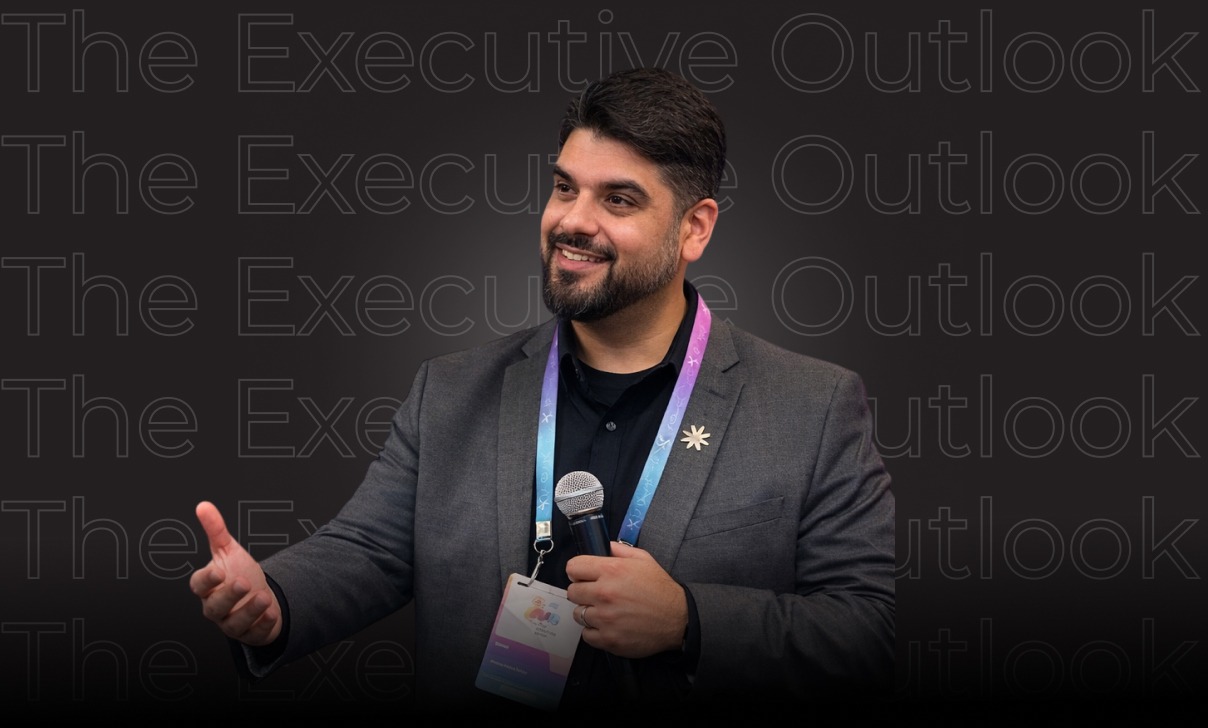

During a recent conversation on The Executive Outlook, Piotr Czarnas, Founder of DQOps, shared his journey of building a company that focuses on solving one of the biggest challenges in today’s data-driven world: ensuring data quality and trust. His words were simple yet powerful, showing how better data leads to smarter decisions and real business impact.
Piotr started by sharing how the idea for DQOps was born. “I exited my previous startup a few years ago and moved into consulting,” he recounted. “During one of the projects, my team designed a data quality platform from scratch for a customer. That’s when we realized we could build a better and more complete version as a product.”
So, alongside the consulting work, Piotr began shaping what would later become DQOps, a platform built from real-world challenges faced by companies struggling to trust their data. “It started as a way to improve what we had already built,” he continued. “We wanted to take those learnings and help more organizations fix data issues before they turn into business problems.”
Bringing Together Consulting and Product Thinking
Piotr explained that running both a consulting service and a product company brings a huge advantage. “It’s a big advantage because customers see that we not only bring a solution but also teach them how to apply data quality,” he said. Many teams, he noted, are still at the early stage of their data quality journey. They need supervision, guidance, and training, not just tools.
This mix of experience allows DQOps to close that gap by offering both the technology and the know-how to make data quality part of daily business life.
Prefer to listen on the go? Tune in to the full podcast episode on Spotify below:
The Real Challenge: Missing Data Ownership
When asked about the biggest challenges companies face, Piotr didn’t hesitate. “The main challenge is the lack of data owners,” he said firmly. “If only data engineers are interested in data quality, then the implementation stays very shallow.”
He explained that engineers can detect technical errors like corrupted files or wrong formats, but business value problems go unnoticed. “Even if there are business users involved, many of them don’t have the technical knowledge to design data quality checks,” he added.
According to him, successful companies are the ones that split data quality roles clearly, with technical specialists who set up systems and business experts who know what “good data” really means. “Without this separation, it’s very hard to provide early business value,” Piotr said.
Watch the full conversation on YouTube by clicking the link below:
Measuring the Impact of Bad Data
Piotr believes that measuring the cost of bad data helps organizations move faster toward solutions. “I always ask customers about their biggest data quality issues that actually impacted the business,” he shared. “Once the impact is visible, once everyone knows how costly the problem was the path to fixing it becomes shorter.”
He explained that bad data can delay reporting, misguide decision-making, and reduce trust in analytics teams. But once people can see and measure that impact, their motivation to fix it becomes real.
Catching Bad Data Early
When asked about the first few signs of bad data, Piotr Czarnas gave a practical answer. “You should start by monitoring the main data quality dimensions, completeness and timeliness,” he said. “Missing values, wrong formats, or delayed updates—these are early signals.”
He added that data reliability is also critical. “If your data pipelines are breaking, or schema changes are happening without notice, you’ll have issues. That’s when observability becomes key,” he continued.
Simply put, the sooner you spot that data is missing, delayed, or incorrect, the sooner you can take action. Catching issues early is like having a compass in the fog; it helps teams steer in the right direction before small errors become costly problems.
Piotr also stressed that the best checks often come from the people closest to the data: ask business users what errors they’ve seen in real life, then design data quality rules to catch those patterns early.
When Good Data Drives Real Business Results
Piotr also shared examples of how fixing data quality creates a real impact. “If you make sure data is delivered on time, let’s say every morning by 10 AM, your business teams can start making decisions right away,” he said.
“But if you wait for another day because the data wasn’t ready, you lose a full day of business actions,” he explained. “That’s the most visible impact, shortening the time to usable data.”
He added that even small improvements, like reducing missing values, can help teams take faster actions, make better forecasts, and improve customer experiences.
How AI is Transforming Data Quality
When the topic shifted to AI, Piotr smiled; it’s clearly an area he’s passionate about. “The most common use of AI today is anomaly detection,” he said. “AI can watch your data’s behavior, like volume, timeliness, or freshness, and alert you when something unusual happens.”
He continued by saying, “AI can also help with rule mining, it can look at your data and suggest checks that might detect issues. And now many tools use conversational AI, where you can simply ask the system which tables or columns have low-quality scores.”
Piotr also reminded us of the practical side: AI isn’t magic. Validating billions of records with AI is costly and often impractical. “AI is a powerful guide, not a replacement,” he explained. “It helps detect anomalies, propose checks, and highlight patterns, but humans must still design, monitor, and interpret the results.”
The Leadership Mindset for Data Quality
When asked about what kind of mindset leaders should have, Piotr’s answer was clear and thoughtful. “Leaders should have some technical knowledge, but more importantly, they need a mindset of continuous improvement,” he said.
He emphasized, “At first, it’s natural to fix problems as they arise. But real progress comes when leaders dig deeper—understand the root causes, anticipate recurring issues, and design processes to prevent them. That mindset of continuous improvement turns data quality from a chore into a competitive advantage.”
Piotr summed it up simply: “A good manager should use data quality KPIs to identify weak areas and then work with data owners to solve the root causes. Otherwise, the team will be buried in repeated issues, the same alerts over and over.”
Spotting Red Flags in the Business
Toward the end of the conversation, Piotr shared valuable advice for leaders who may not realize when things are going wrong. “Most red flags come from a lack of visibility,” he said. “Business users don’t always look into data, so technical teams should communicate issues clearly through reports and dashboards.”
He added, “When you show the business team a list of issues with priorities and impact, they start to see which problems really matter. That’s how you make them act by showing, not just telling.”
According to him, this collaboration saves time, prevents repeated issues, and helps everyone see the real cost of poor data. “Sometimes fixing one problem can save a whole week of work for a team,” he added. “That’s the power of visibility.”
Final Thoughts: Building a Culture of Trust
As the conversation drew to an end, Piotr reflected on what truly drives good data practices. “Data quality is not just a technical process,” he said thoughtfully. “It’s about people, communication, and trust.”
He believes that organizations succeed when leaders see data quality not as a task to finish but as a journey to continue. When teams combine the right tools, clear ownership, and open collaboration, even the most complex data becomes meaningful.
Piotr added with a smile, “You can’t build business value on data that people don’t trust. But once that trust is there, everything else follows naturally faster reporting, confident decisions, and a stronger connection between business and technology.”
He left us with a simple yet powerful reminder that trust is not built by data alone, but by the people who care enough to make that data right.
For more inspiring stories of leaders shaping the future of data, AI, and strategy, stay tuned with The Executive Outlook.
Editor Bio

I’m Isha Taneja, serving as the Editor-in-Chief at "The Executive Outlook." Here, I interview industry leaders to share their personal opinions and provide valuable insights to the industry. Additionally, I am the CEO of Complere Infosystem, where I work with data to help businesses make smart decisions. Based in India, I leverage the latest technology to transform complex data into simple and actionable insights, ensuring companies utilize their data effectively.
In my free time, I enjoy writing blog posts to share my knowledge, aiming to make complex topics easy to understand for everyone.