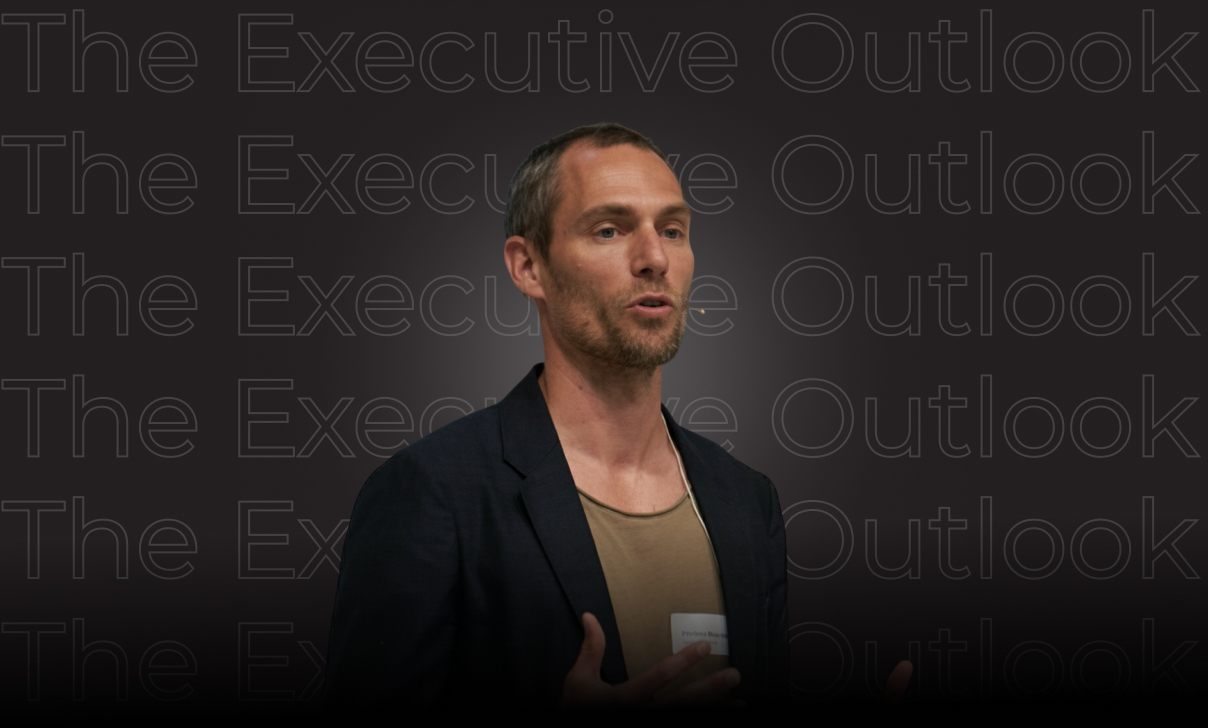

Fausto Schiavone on Building Data and AI for Business Transformation 

Fausto Schiavone on Building Data and AI for Business Transformation 
During a recent conversation on The Executive Outlook, Fausto Schiavone shared how he has helped organizations use data and AI for business transformation and turn them into real business results. He has worked across telecommunications, consumer goods, and now the international humanitarian sector. In each role, he has focused on building data and AI capabilities that support real decisions, improving customer experience, media efficiency, and even mission-critical operations. In this interview, he explains why a strong data foundation matters, how to use AI responsibly, and why soft skills like influencing and sharing a common vision are just as important as technology.

Building Scalable Data Capabilities

Fausto Schiavone describes his career as a mix of opportunity and deliberate choice. Early in his journey, he worked with business teams where data and AI were used directly to support decisions. This shaped how he sees technology even today. “The value of IT isn’t always easy to measure. But when you see how data-driven decisions impact sales and revenue, it becomes very motivating.” Even as he moved into more managerial roles, he chose to stay close to the frontline—where campaigns run, customers respond, and results are measured. For him, data and AI are not side projects; they are tools to improve how the business actually works.
Prefer to listen on the go? Tune in to the full podcast episode on Spotify below:

Industry Experience: From Telecom to Humanitarian Work

Fausto’s journey cuts across very different sectors:
  • In telecommunications, he worked on digital broadcasting systems, seeing how infrastructure can change how people consume content.
  • In consumer goods, he spent around 20 years at Procter & Gamble, working in digital and e-commerce, and later leading large programs around consumer data platforms and first-party activation.
  • Today, he serves as a global data architect in the international humanitarian sector, where data and AI support decisions that can impact people in vulnerable situations.
This mix of commercial and humanitarian work gives him a broad view of how data and AI can serve both business goals and social impact.
Watch the full conversation on YouTube by clicking the link below:

A Case Study: Making Paid Search Work Harder

One of Fausto’s key examples comes from his time at P&G. The situation was familiar: the company was spending a lot on online paid search, but the return on investment was unclear. When his team looked deeper, they found that much of the budget was going toward low-quality keywords that were not performing well. Inside meeting rooms, the charts looked impressive—spending was high, campaigns were live—but the simple question kept coming up: “Is this actually working?” To fix this, they built an algorithm that:
  • Watched search performance in real time, and
  • Automatically paused bids on low-quality score keywords.
This reduced waste and improved media efficiency. However, the harder part was not the code—it was the change:
  • The internal search team was resistant to the new approach.
  • Fausto’s team started with a pilot, showed real savings, and then took their results up to the Chief Marketing Officer.
  • With leadership support, the solution was scaled across brands and regions, creating significant savings that could be reinvested into other channels.
For him, this project shows how technical expertise + change management + senior sponsorship can turn a single use case into a scaled capability.

Leading Through Complexity in a Matrix Organization

When he talks about the hardest part of large data and AI programs, he doesn’t blame tools or platforms. He talks about complex organizations. Most large systems:
  • Cut across many functions, regions, and teams
  • Involve several owners and decision-makers
  • Sit inside a matrix structure where no one person controls everything
In this kind of setup, success depends on influence:
  • Horizontal influence—working with peers and teams who don’t report to you, and still getting them aligned.
  • Vertical influence—speaking up with senior leaders, securing sponsorship, and getting approvals when it really matters.
Fausto is clear that he did not learn these skills from project management textbooks. He developed them through hands-on experience, coaching, and mentorship throughout his career. For him, these soft skills are just as critical as any technical skill when leading digital and data transformation.

Fixing Data Chaos: Vision, Sponsorship, and Small Starts

Many companies say they want to be “data-driven” but still struggle with:
  • Data in silos
  • Different tools in each department
  • No single, clear data strategy
When asked what to do in this situation, Fausto starts with three simple steps.

1. Create a clear, human vision

In one large program to modernize a consumer data platform, his team had many possible slogans: “media optimization,” “personalization,” and more. None of them felt real. They finally chose something everyone understood: “We want to stop annoying our consumers with the same repeated messages online.” This simple statement turned into concrete goals like better media orchestration and frequency capping. It was easy to communicate and linked directly to consumer experience.

2. Build a winning coalition

A strong vision needs senior sponsors who believe in it, defend it, and fund it. Fausto stresses the importance of creating a coalition of leaders who will support change even when internal resistance appears.

3. Start small, prove value, then scale

Instead of trying to change everything at once, he always prefers pilots and proof-of-concepts. A small success with low risk can create a “bowling alley” effect—once one pin falls, the others follow. This also gives teams a chance to adjust the strategy as they learn.

Using AI Safely: Secure, Ethical, and Well-Governed

When dealing with sensitive or high-risk data, especially in his current humanitarian work, he is very clear: AI must be safe, legal, and ethical. He looks at this from two angles.

Technical foundations

Organizations need:

  • A secure data architecture
  • Strong data governance
  • Proper encryption and access control
  • Compliance with laws such as GDPR and CCPA
Without these basics, any AI project is risky.

Organizational governance

Fausto also recommends creating a cross-functional AI governance body that:
  • Reviews AI use cases
  • Checks for legal, ethical, and reputational risks
  • Aligns AI projects with the company’s values and responsibilities
This is not about slowing innovation. It is about responsible for innovation—avoiding misuse of data, protecting trust, and preventing unintended harm.

Are You Really Ready for AI?

Many companies now claim they are “ready for AI,” but he is careful. He notes that a large number of AI pilots never scale. To him, real AI readiness includes:

  • A clear AI strategy and a process to decide which use cases to start, stop, or scale
  • A strong data foundation with good architecture, governance, and data quality
  • Cultural buy-in, where employees understand what AI is for and can openly talk about fears, including fear of job loss
  • Ethical principles that guide how AI is used at scale—not just what is possible, but what is responsible
Without these elements, AI remains a set of experiments rather than a real business capability.

Final Thoughts: Data and AI for Business Transformation

For Fausto, AI is not about hype. It is a better decision engine. Used well, AI can help organizations:
  • Make faster and more accurate decisions
  • Use their data more intelligently
  • Improve experiences for customers and communities
But this only happens when AI is built on strong data, a clear strategy, good leadership, and ethical guardrails.
Want to learn from more leaders like Fausto?

Click here to discover more conversations and stories from executives shaping the future of data and technology on The Executive Outlook.

Editor Bio

Isha Taneja

I’m Isha Taneja, serving as the Editor-in-Chief at "The Executive Outlook." Here, I interview industry leaders to share their personal opinions and provide valuable insights to the industry. Additionally, I am the CEO of Complere Infosystem, where I work with data to help businesses make smart decisions. Based in India, I leverage the latest technology to transform complex data into simple and actionable insights, ensuring companies utilize their data effectively.
In my free time, I enjoy writing blog posts to share my knowledge, aiming to make complex topics easy to understand for everyone.


Leave a Reply

Your email address will not be published. Required fields are marked *