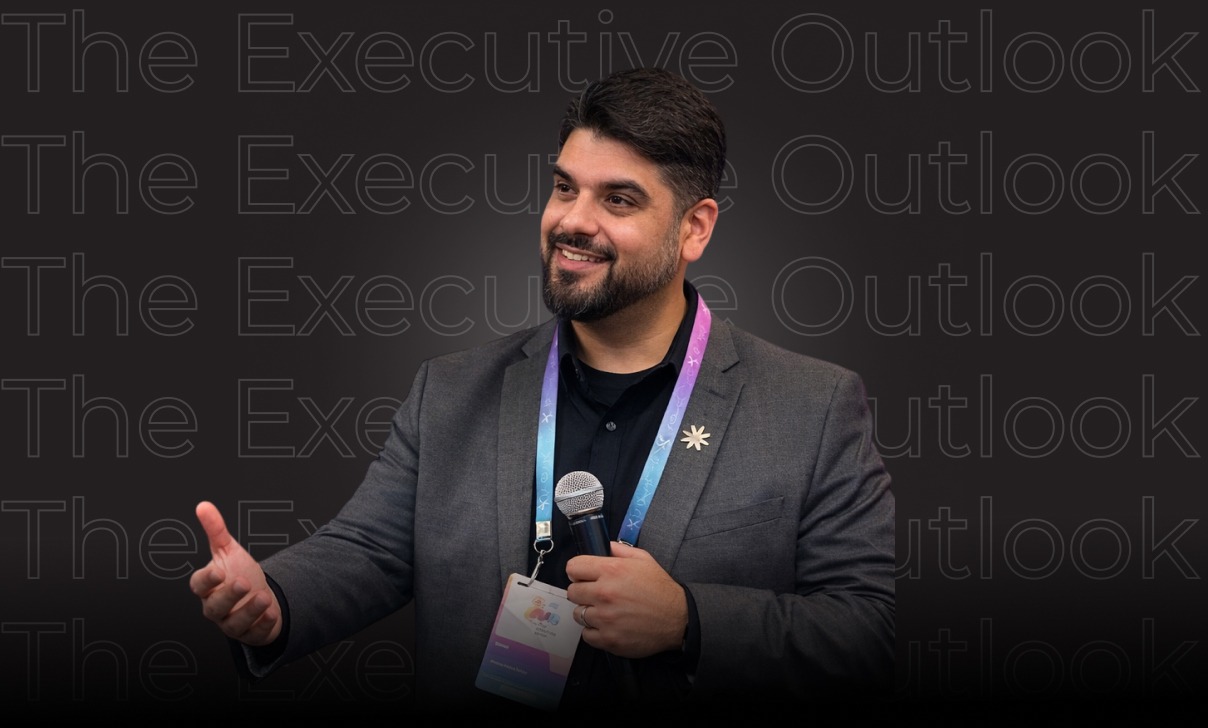
During a recent conversation on The Executive Outlook, Dr David Marco shared his thoughts on AI governance and how strong metadata management, data governance and data quality lay the foundation for responsible and scalable AI. With over 60 successful implementations and years of hands-on leadership experience in metadata and governance, his perspective is grounded in real-world enterprise projects, not just theory.
Dr Marco’s core belief is simple: AI cannot scale responsibly without trustworthy data foundations. Many organizations are excited about AI, but the real bottleneck is often messy, inconsistent, and poorly governed data. In this article, we explore how he connects metadata, KPIs, and use cases to build AI that is safe, compliant, and usable in the real world.
Prefer to listen on the go? Tune in to the full podcast episode on Spotify below:
One of the strongest aspects of Marco’s message is how he ties data governance to real-world consequences. He recalls the stress of system failures, late-night calls, and high-cost firefighting. These experiences gave him a deep respect for the damage bad data can cause and the operational chaos it creates across the enterprise.
This is why AI governance excites him. When companies start exploring AI at scale, the first concern they often hear is: “Our data isn’t ready.” To Marco, this is not a new problem. It’s the same foundational challenge that data governance and metadata management were created to address, now amplified by AI.
Watch the full conversation on YouTube by clicking the link below:
Dr Marco shares a compelling example from a major hospital that wanted to build an enterprise data warehouse for cancer analytics. The stakes were unusually high because decisions powered by these analytics could directly affect patient outcomes.
Instead of immediately agreeing to build the data warehouse, Dr Marco advised the hospital that they were not ready. The foundational work needed to be done first. He emphasized three key pillars that must be in place before building high-stakes analytics or AI systems:
He defines metadata as the technical backbone that explains the who, what, when, where, how, and why of enterprise data. Without it, organizations lack control, clarity, and consistency.
The hospital accepted this approach, and the result was not only a successful platform but also a measurable real-world impact, including reduced mortality rates. This case proves that data governance ROI is more than just cost savings; it can save lives.
When it comes to starting metadata management, he begins by focusing on business value, not just the tools. He emphasizes that metadata, governance and AI initiatives are major investments, often costing millions over time for large enterprises and government agencies. Without clear baseline KPIs, leaders risk inviting scepticism and unclear outcomes.
Only after clarifying what success looks like does Dr Marco recommend selecting tools that can support metadata management, governance, data quality and AI governance in a more integrated way. His advice is to avoid purchasing fragmented solutions and, instead, focus on a unified approach that reduces integration complexity and improves adoption.
This not only reduced operational strain but also lowered costs, reinforcing Marco’s wider message: metadata gives organizations control over blind spots that quietly drain budgets and productivity.
After establishing metadata management, Marco recommends expanding governance and quality through a focused, strategic approach. He advises organizations to prioritize critical data elements and the most mission-critical systems first, rather than trying to fix everything at once. Whether advising a mid-size manufacturer or a large federal agency, the approach remains the same: target systems that have the highest impact and build out from there.
Dr Marco describes the current AI landscape as a gap between unrealistic expectations and enterprise reality. Many executives assume that AI should be cheap and easy, given the consumer tools that seem simple to use. However, enterprise AI is fundamentally different; it’s more expensive, complex, and heavily reliant on clean data, clear governance and trained teams.
He acknowledges the fear organizations feel about AI accuracy and reliability, but he also believes the industry is maturing quickly. Frameworks like the NIST AI Risk Management frameworks are emerging to provide organizations with structure and confidence as they navigate the complexities of AI deployment.
Just as data warehousing once felt unfamiliar before becoming mainstream, Marco believes AI will follow a similar path. As standards strengthen and best practices become more widely understood, AI will become ubiquitous in organizations. From his conversations, many companies plan to focus on strategy and foundation building in the next few years, then scale their AI implementations once these basics are in place.
Dr. Marco’s advice on early AI initiatives is straightforward. He recommends staying use-case-driven, keeping the scope manageable, and avoiding unnecessary complexity in the early stages. As he puts it, “Don’t try to boil the ocean.” He also warns that scanning every system in an organization doesn’t automatically improve AI accuracy.
Here are his practical guardrails:
Dr Marco’s framework for defining AI and data use cases is based on a logic that leaders can apply in any industry. He suggests evaluating opportunities in this order:
He supports this with real enterprise stories, such as the financial services case where a data steward caught a potential error just before regulatory reporting—avoiding a public violation and massive reputational damage. In another example, sensitive PII was found duplicated across uncontrolled environments, highlighting the urgent need for data governance.
Each example reinforces the same truth: governance is not bureaucracy. It’s what makes AI safe, scalable, and trusted.
Dr David Marco strikes a rare balance of ambition and discipline. He accepts AI innovation; he insists that AI must be built on strong foundations. His perspective is rooted in real-world experience, where technology succeeds only when people trust the data behind it.
His message is clear: start with metadata, anchor programs in measurable KPIs, focus on the big rocks, and scale AI only when the foundation is strong enough to support it.