

From Data Projects to Data-Ready Culture: The 2026 CEO Outlook

From Data Projects to Data-Ready Culture: The 2026 CEO Outlook

Why the CEO Outlook Is Moving from Tools to Culture

In every industry tech outlook for 2026, you’ll see the usual stack of trends: AI, data platforms, cloud, automation, cybersecurity. But when you listen carefully to how CEOs talk behind closed doors, a different concern shows up: “Do my people know how to use this data? Can they question it, challenge it, and act on it?” That question is quietly reshaping the modern CEO outlook. Leaders are realizing that more tools do not automatically create better decisions. Dashboards, models, and copilots only matter if managers and teams have the mindset and confidence to use them. The focus is shifting from launching new data projects to building data-ready cultures—organizations where data is part of daily conversations, not just an IT report that arrives once a month. This is where platforms like Executive Outlook magazine add value. Instead of just summarizing the next wave of technology, they showcase how real leaders change meeting rhythms, roles, incentives, and language so that data becomes a shared responsibility, not a specialist’s hobby.

Three Culture Shifts Inside a Modern CEO Outlook

The Modern CEOs who treat culture as the core of their 2026 CEO outlook tend to make three visible shifts.

Culture Shift 

What Changes in Practice 

Why It Matters for 2026 CEO Outlook 

From Reporting to the Top → Equipping the Middle 

Frontline + mid-level managers get simple, reliable views of the numbers they control (process time, defects, feedback, branch performance) 

Decisions improve where work happens—daily execution becomes smarter, not just board reporting 

From Data Literacy Training → Performance Expectation 

Managers must explain which metrics they track, how they interpret them, and where data might be wrong 

Builds judgment, not blind trust—creates confident teams that use data responsibly 

From Governance Checklist → Trust + Defensibility Culture 

AI/data discussions include risk, explainability, and how decisions will be defended to customers/regulators 

Makes speed safer—reduces compliance surprises, protects credibility, and builds long-term trust 

So What Should a CEO Do Next to Make These Culture Shifts Real?

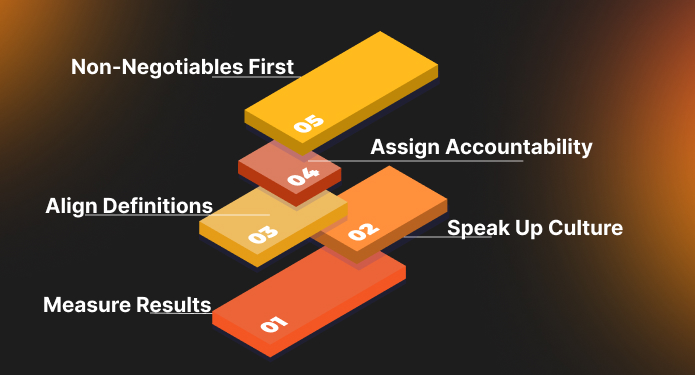
1 - Non-Negotiables First:

Choose a small set that defines performance across teams, so the org stops chasing 30 dashboards.

2 - Assign Accountability:

Assign who owns each metric, who reviews it, and who acts when it moves in the wrong direction.

3 - Align Definitions:

Lock “what this metric means” first—because shared language beats fancy dashboards.

4 - Speak Up Culture:

Encourage managers to raise “this looks wrong” without fear—so issues get fixed early, not hidden.

5 - Measure Results:

In monthly reviews, ask: “What changed in results?” not “What did we build?”—this keeps culture tied to impact.
What Should a CEO Do Next to Make These Culture Shifts Real

How Complere Infosystem Helps CEOs Make Culture Concrete

At Complere Infosystem, we see this pattern across industries: CEOs don’t want another long industry tech outlook presentation. They want a small set of moves that will change how their teams behave in the next 12–18 months. That usually starts with three practical steps:

How Complere Infosystem and The Executive Outlook Support the CEO Outlook

  • Simplifying the “core metrics view” so different departments aren’t fighting over which number is correct.
  • Designing lightweight data rituals—short weekly or bi-weekly reviews where teams look at a consistent set of metrics and agree on actions. g
  • Building enablers around those rituals: clear definitions, governance, and the right tooling so data is easy to pull and hard to misuse.
In parallel, The Executive Outlook becomes a reflection space for leaders—capturing stories of how they coached teams, where resistance came from, and how they turned abstract “data culture” language into concrete expectations for managers and staff. The strongest CEO outlook documents we see now are not glossy PDFs filled with acronyms. They read like leadership promises: “This is how we will use data in meetings. This is what we expect from our managers. This is how we will handle risk and mistakes.”

If you want your CEO outlook to be more than a slide deck—and turn into daily habits your teams actually follow—The Executive Outlook and Complere Infosystem can help. Together, we help you define the culture you want, the metrics that prove it, and the data foundations that make it real.

Editor Bio

Isha Taneja

I’m Isha Taneja, serving as the Editor-in-Chief at "The Executive Outlook." Here, I interview industry leaders to share their personal opinions and provide valuable insights to the industry. Additionally, I am the CEO of Complere Infosystem, where I work with data to help businesses make smart decisions. Based in India, I leverage the latest technology to transform complex data into simple and actionable insights, ensuring companies utilize their data effectively.
In my free time, I enjoy writing blog posts to share my knowledge, aiming to make complex topics easy to understand for everyone.


Leave a Reply

Your email address will not be published. Required fields are marked *