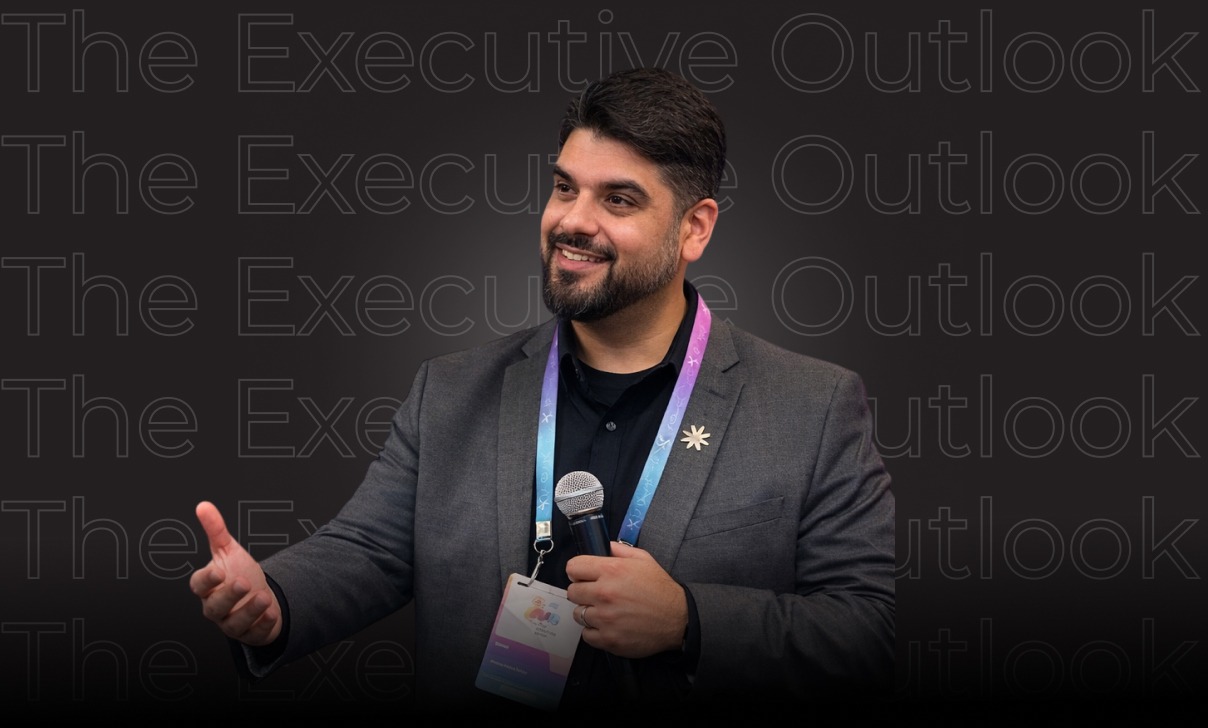

Data Foundations: Kevin Cassar on Migration and Governance 

Data Foundations: Kevin Cassar on Migration and Governance
During a recent conversation on The Executive Outlook, Isha Taneja spoke with Kevin Cassar, Director and Chief Data and AI Officer at TalkTalk. His approach to data and AI is distinctly executive: practical, outcome-led, and grounded in the realities of operating at scale. Kevin does not treat data as a department or AI as a separate innovation track. He treats both as parts of the same system, one that must be reliable enough to support growth, measurable enough to justify investment, and governed enough to earn trust. In his view, data foundations are what makes that system possible.

The moment that set the tone: data foundations make value repeatable

Kevin joined TalkTalk just over four months ago, and his first focus is not flashy AI initiatives. It is establishing strong data foundations so the business can move faster without building a mountain of technical debt. His framing is direct: value is the goal, P&L uplift and customer satisfaction, but value at pace only comes when the platform and operating model can support it. When foundations are weak, acceleration becomes fragile. This is where many modernization programmes go wrong. They optimize milestones that are easy to announce, such as migrating to the cloud, launching a new dashboard, or deploying a model. But business experiences transform differently. It experiences it through consistent performance under real load, data quality that is trusted across teams, incidents that are visible and recoverable, costs that stay controllable as usage grows, and clear ownership when something breaks. Kevin’s point is simple: these outcomes do not happen by accident. They have to be designed into foundations. If you skip that work early, it does not disappear. It returns later as delays, rework, risk, and loss of confidence.

A leadership lens shaped by risk and outcomes

Kevin’s leadership voice reflects a blended career: commercial delivery on one hand and risk discipline on the other. He has worked in regulatory environments, building an instinct for control, accountability, and mitigation. He has also operated in commercial environments, where profitability and customer satisfaction are non-negotiable. That combination shows how he approaches transformation. Value matters, but it must be defensible. Speed matters, but it must be sustainable. Innovation matters, but it must be governable. It is a refusal to accept false tradeoffs. The best teams do not choose between pace and safety. They build a system that delivers both.

Cloud migration: the biggest mistake is measuring the wrong success

Kevin has lived through migrations across multiple organizations, and his strongest message is also the most overlooked: migrations fail quietly when success is defined too narrowly. If success means only moving data, teams declare victory, then spend months dealing with degraded performance, confusing ownership, weaker trust in the numbers, harder to operate systems, cost surprises, and increased risk exposure. Kevin advocates defining migration success as a multi-dimensional scorecard that reflects what the business actually needs.

Performance: peak behavior, response time, batch windows, throughput
Reliability: error patterns, recovery behavior, consistency of delivery
Security: access controls, auditability, safe handling of sensitive data
Operability: runbooks, alerts, incident processes, realistic staffing
Cost control: governed consumption so scale does not multiply waste
Data trust: quality, lineage, mapping, and clear ownership

The executive insight is key: migration is a new operating reality, not a technical move. If leaders do not define success across these dimensions, they risk the worst outcome of all, change fatigue without improvement.

Stress tests before production stress tests you

Kevin’s next lesson is pragmatic: do not wait for real customers and real operations to reveal weaknesses. Bake in scenario testing that mirrors real-life conditions. That includes load and stress testing, resilience checks and fault injection, disaster recovery planning and validation, and scenario modelling that challenges assumptions early. Modern platforms fail in predictable ways: upstream feeds arrive late, schemas change; volumes grow, dependent services fail, or usage spikes when decisions depend on the output. Testing that exposes these patterns early lets teams fix issues while the cost of change is still manageable. It also builds confidence because readiness is proven, not promised.

Culture change: federated data only works with shared responsibility

On culture change, Kevin was clear: it is not nice to have. It is essential, especially as organizations move toward self-serve analytics and agent-driven workflows. He supports a federated approach: empowering the business to move quickly. But empowerment without education and responsibility becomes chaos. The cultural shift he described includes endorsement from the top, education and literacy so consumers understand responsible usage, shared accountability so data is not treated as the data team’s job, and clear roles like data owners and data stewards with real responsibilities. Shared ownership does not mean leaving people alone. It means providing frameworks, best practices and support so data becomes an organizational capability, not a bottleneck.

A case study that captures the mindset: customer impact and P&L impact

Kevin shared a health sector example where specialized resources were finite and expensive, and not every customer needed the same level of support. Without targeting, the organization either overspent or missed the chance to help the people who needed it most. The solution was simple in principle: business and data teams built data products to identify who needed the most support, then allocated resources accordingly. The impact was two sided. First, better resource utilization, a P&L benefit. Second, faster recovery outcomes are a customer benefit. The deeper takeaway: data value is not insightful. It is improved decisions and actions, delivered in a way that is trusted enough to operate.

Governance from scratch: Kevin’s first three moves

Asked how to stand up governance, starting with data governance and extending to AI governance, Kevin’s answer was structured and operator friendly. Set up the right governance structure. Bring in sponsors who can unblock and leaders who can translate decisions into daily practice, without excessive overhead. Define policies and procedures, then translate them into playbooks Governance must be usable. Playbooks turn principles into repeatable behaviour. Drive culture and share accountability. Governance works when it becomes a collective agreement, supported by escalation paths and remediation when issues arise. On timelines, he was realistic: it depends on maturity and capability. Governance is not a document you publish. It is an operating model you build.

Tool choices: context beats preference

In rapid fire questions, Kevin avoided hard preferences, and that is the point. Tool choices only work when they match organizational context. Cloud platforms depend on skills, cost structures, and long-term direction. Visualization tooling depends on adoption patterns, economics, and broader platform strategy. Cloud versus on-premises depends on scale, security needs, and cost trade-offs. For startups, his advice was grounded: do not plan only for today. Think in a three to five year horizon, align to skills you can sustain, and avoid decisions that force expensive pivots later.

Closing reflection

Kevin’s perspective is a reminder that transformation does not fail because teams lack ambition. It fails when foundations are treated as optional. Migration, governance, and AI acceleration are not separate conversations. They form one connected system. If the data platform is not reliable, secure, observable, and owned across the business, every new use case becomes harder, slower, and riskier to scale. What makes Kevin’s approach practical is his insistence on defining success beyond data moved. He pushes for multi-dimensional metrics, real-life stress testing, and a culture where responsibility is shared, not parked with the data team. That becomes even more important as organizations move toward self-serve and agentic AI, where empowerment must come with guardrails. The takeaway is simple: invest early in what makes speed sustainable. Data foundations are not a delay. They are the fastest path to durable value.
For more leadership stories on data governance, and AI at scale, stay tuned withThe Executive Outlook.

Editor Bio

Isha Taneja

I’m Isha Taneja, serving as the Editor-in-Chief at "The Executive Outlook." Here, I interview industry leaders to share their personal opinions and provide valuable insights to the industry. Additionally, I am the CEO of Complere Infosystem, where I work with data to help businesses make smart decisions. Based in India, I leverage the latest technology to transform complex data into simple and actionable insights, ensuring companies utilize their data effectively.
In my free time, I enjoy writing blog posts to share my knowledge, aiming to make complex topics easy to understand for everyone.


Leave a Reply

Your email address will not be published. Required fields are marked *