Sam Knowles: Data Storytelling Driving Business Transformation

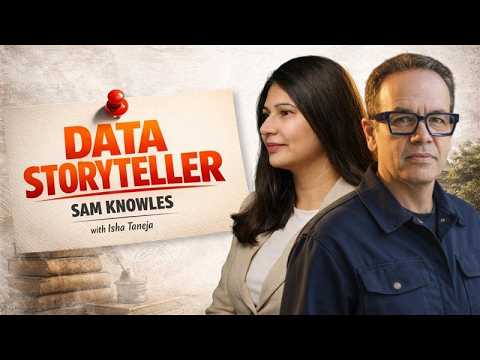
Sam Knowles - Founder & MD and Chief Data Storyteller at Insight Agents
In this episode of The Executive Outlook, we speak with Sam Knowles, founder of Insight Agents. Sam combines years of consultancy with a deep understanding of human psychology to help organisations transform complex data into powerful stories that drive action. As the author of the ‘Using Data Better’ trilogy, Sam’s training empowers individuals and organisations to ask smarter questions and achieve actionable insights. He’s also a sought-after speaker and podcaster, sharing his expertise on data storytelling’s transformative power.

From Ancient Texts to Modern Data

Sam’s journey into data storytelling started in the ancient world. He studied Latin, Greek, and Sanskrit – languages rooted in rich storytelling traditions. That love of narrative stayed with him, even as he tried to break into modern creative industries. He initially aimed for advertising, applying for well over 100 jobs, often reaching first interviews but not second interviews. Eventually, he stumbled into public relations. And in PR, he found a crucial lesson: unlike advertising, where stories can pay for placement, PR stories must earn their place at the table. That demand for credibility shaped his approach to narrative work. Over time, he grew dissatisfied with PR for two reasons:
  • Many agencies struggled to measure impact clearly.
  • They often underweighted psychology even though PR is fundamentally about influencing opinions, attitudes, beliefs, and behaviours.
That dissatisfaction pushed him back to school: first a master’s, then a doctorate in experimental psychology.

The Turning Point: Merging Psychology with Data

After earning his doctorate, Sam’s career took a significant turn. Armed with his understanding of human behavior, he entered the world of data, a space that was rapidly growing but still largely disconnected from the art of storytelling. Sam quickly noticed a gap: organizations were drowning in data but struggling to make sense of it, let alone use it effectively in decision-making. That’s when he realized the immense potential of combining data with storytelling. In 2013, Sam founded Insight Agents with the goal of bridging the gap between data and storytelling. Insight Agents specializes in helping businesses, charities, universities and government departments harness the power of data to tell compelling stories. Sam’s approach is simple yet powerful: use data to craft narratives that drive decision-making and bring clarity to complex issues. Through Insight Agents, Sam has worked with a diverse range of clients, helping them transform their data into stories that are not only insightful but also actionable. Whether it’s helping businesses understand their customers better or guiding organisations through complex data challenges, Sam’s unique methodology has become a game-changer in the world of data storytelling.

Overcoming Early Challenges

When Sam first introduced the concept of data storytelling, it was met with confusion. Many organizations had never heard of it, and some even saw it as a contradiction. “Data” and “storytelling” seemed to exist in separate worlds. Sam’s biggest challenge was convincing potential clients that data could be transformed into compelling stories and that these stories could drive real business outcomes. Sam found that the fastest way to make data storytelling real was to start with “where it hurts.” Clients would often say things like:
  • “We have so much data and so little insight.”
  • “Teams are drowning in data.”
  • “We can’t join data sources across departments.”
  • “We want to understand customers’ lives, but we can’t.”
Once pain is clear, data storytelling becomes an obvious solution. But Sam’s approach was not about flashy graphs or complicated analytics. Instead, it was about simplifying the narrative, turning complex datasets into clear, understandable, and actionable stories. As more organisations struggled with the overwhelming amount of data they had, they began to realise the true value of storytelling. Sam comes back to two practical prompts that turn analysis into action:
  • “So what?” → What do the data mean?
  • “Now what?” → What should we do as a result?

The Science of Data Storytelling

What made Sam’s approach stand out was not just his ability to create narratives, but his deep understanding of human psychology. Drawing from his background in experimental psychology, Sam understood that at the heart of every decision is emotion. People don’t just make decisions based on facts; they make them based on how those facts make them feel. By combining the emotional power of storytelling with the logical rigor of data, Sam was able to craft narratives that not only engaged the audience but also moved them to act. In his work with Insight Agents, Sam helped organizations bring together their teams’ insight, analytics, marketing, and finance which often operated in silos. His method of combining data with storytelling broke down those barriers, creating a more unified approach to decision-making.

Sam’s Books and Training: Sharing the Storytelling Methodology

Sam’s influence extends beyond consultancy and into education. He is the author of the Using Data Better trilogy, which includes the best-selling How to be Insightful and the critically acclaimed Asking Smarter Questions and Narrative by Numbers. These books form the foundation for Sam’s popular training courses, which are delivered both in person and online through Datasmart. In his courses, Sam shares the methodologies he developed to help organizations build narratives from data. His goal is not just to teach people how to tell stories, but to show them how to ask the right questions and understand the psychological aspects of data interpretation. The response has been overwhelming, as individuals and organizations seek to learn how to make data-driven decisions through storytelling.

Data Storytelling as a Business Model

Data storytelling as a service was a novel concept when Sam first introduced it. Many organizations didn’t have a budget line for “data storytelling.” They didn’t understand it, and they didn’t know where it fit in with their other processes. However, as Sam started working with businesses, marketing teams, and finance departments, he showed them that data storytelling wasn’t just a creative tool, it was a business imperative. By helping clients understand their data through storytelling, Sam provided them with the insights they needed to drive action. His methodology became invaluable, especially when clients were faced with the challenge of integrating diverse data sources across different departments.

AI and Data Storytelling: A Partnership for the Future

As AI continues to evolve, Sam sees it as a powerful partner in data storytelling but not a replacement for human insight. AI is excellent at processing vast amounts of data, but it lacks the ability to understand the human context behind that data. Sam’s philosophy is that AI should be used to support data storytelling, not replace the storyteller. By working alongside AI, data storytellers can uncover patterns and insights that were previously hidden in unstructured data. But Sam emphasizes that while AI can help identify patterns and trends, it’s the human element, understanding the emotional context behind the data that makes the story truly impactful. Sam is excited about AI but cautious, particularly because LLMs can hallucinate and answer with high confidence even when wrong. His guidance is to use AI as a partner, not as a way to subcontract thinking and decision-making. If you outsource deep work, you won’t understand the output well enough to defend it or learn from it.

The Power of Asking the Right Questions

Sam believes that one of the most important aspects of data storytelling is asking the right questions. Rather than jumping straight into data analysis, Sam emphasizes the importance of starting with the question: What decision do we want to drive with this data? By focusing on the goal first, data storytelling can help identify the insights that will influence those decisions. Sam also stresses the importance of curiosity and empathy when working with data. By asking the right questions and listening closely to the challenges clients face, data storytellers can identify pain points and uncover insights that might otherwise go unnoticed. This approach, which Sam refers to as “tactical empathy”, is critical for developing stories that resonate with the audience and drive action.

Case Study: Transforming the Pharma Industry

One of Sam’s most notable case studies comes from his work with Novartis, a global leader in the pharmaceutical industry. Novartis faced a common challenge: they had vast amounts of data on their patients, but they struggled to bring it all together in a meaningful way. Sam helped them develop a methodology to understand patient experiences better, using both qualitative and quantitative data. By applying this approach, Sam helped Novartis make more informed decisions, not just based on clinical data but on the human experiences behind it. This approach not only improved the way the company understood its patients but also allowed them to create more targeted, effective treatments. Sam frames the underlying driver as “voice of the patient” expectations in drug design and delivery. Novartis had many research streams (e.g., social listening, advisory boards, and primary research) but lacked a consistent way for cross-functional teams to synthesise them into usable insight. Using a four-step insight method from How to Be Insightful, teams were guided to:
  1. Get genuinely curious about the problem.
  2. Take time away from it (incubation).
  3. Capture “Eureka” moments when insight lands, and
  4. Validate those insights with the real
The output was a set of patient insights written in first person, validated with patients, and translated into practical activity plans. Sam describes codifying the approach, training around 100 people, and running the workshop process repeatedly across the organisation. He also points to the long-term value: research often gets filed away after a campaign, but a consistent methodology, especially as AI search/LLMs get layered over archives, makes historic research far more reusable. He notes that while therapies evolve, many disease experiences remain stable enough that validated patient insights can stay valuable for years.

Before Collecting or Analyzing Data: The Best-Practice Questions

Before collecting more data or running analysis, Sam recommends a simple discipline:
  • Start with “Why?” (and keep asking until the real reason surfaces). He references the book A More Beautiful Question by Warren Berger and notes how children ask “why” constantly, but adults are trained out of it.
  • Use the 5 Whys root-cause exercise (commonly associated with Sakichi Toyoda and Toyota) to clarify the real driver behind the work.
  • Ask: What decision are we trying to drive?
  • And critically: aim to test hypotheses, not prove them. “Proving” brings bias and assumptions; “testing” keeps you honest and makes you more likely to discover what’s actually true.

Looking Ahead: The Future of Data Storytelling

Sam’s work has shown that the future of data storytelling will continue to be shaped by the intersection of human insight and advanced technology. As AI continues to improve, organizations will have even more powerful tools at their disposal. However, Sam remains firm in his belief that the true value of data comes not from technology itself but from the ability to craft a narrative that resonates with people. For Sam, the art of data storytelling is more than just presenting facts and figures; it’s about making data meaningful, actionable, and ultimately transformative for businesses. As data becomes more central to every decision-making process, the ability to tell compelling stories with that data will be a crucial skill for leaders in every industry.

Ready to transform your data into impactful stories? Subscribe to The Executive Outlook for more insights from thought leaders like Sam Knowles.

Editor Bio

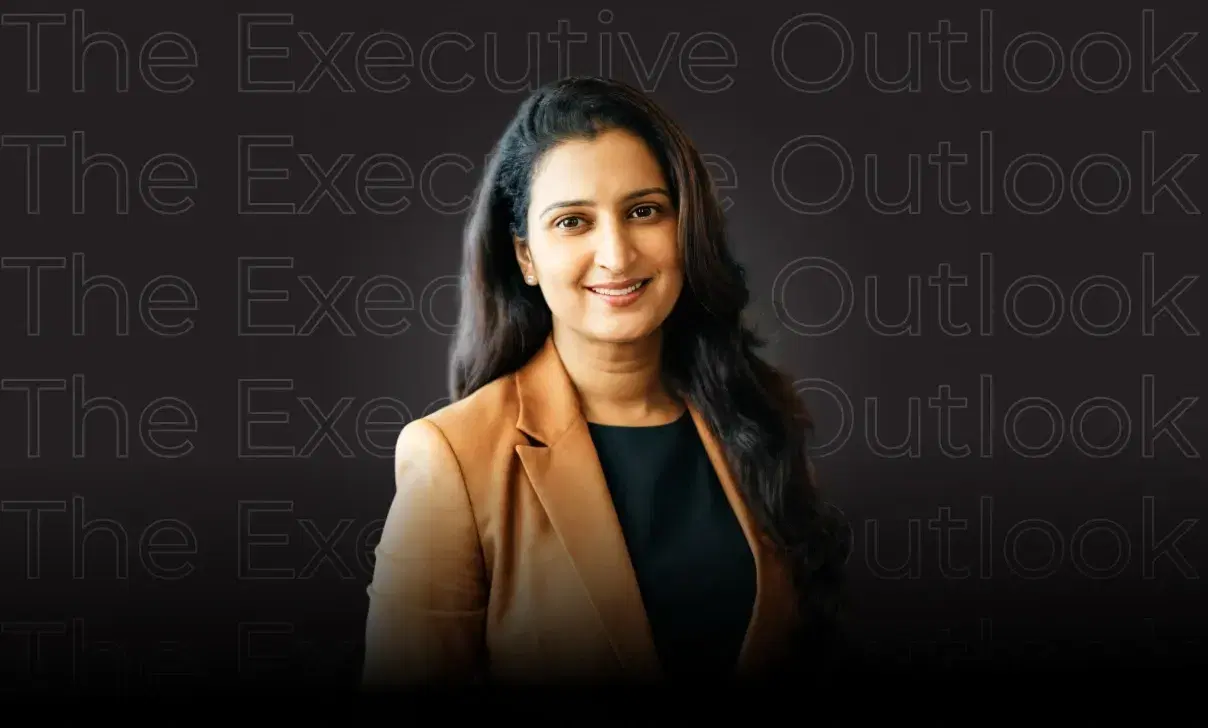
Isha Taneja

I’m Isha Taneja, serving as the Editor-in-Chief at "The Executive Outlook." Here, I interview industry leaders to share their personal opinions and provide valuable insights to the industry. Additionally, I am the CEO of Complere Infosystem, where I work with data to help businesses make smart decisions. Based in India, I leverage the latest technology to transform complex data into simple and actionable insights, ensuring companies utilize their data effectively.
In my free time, I enjoy writing blog posts to share my knowledge, aiming to make complex topics easy to understand for everyone.

Leave a Reply

Your email address will not be published. Required fields are marked *