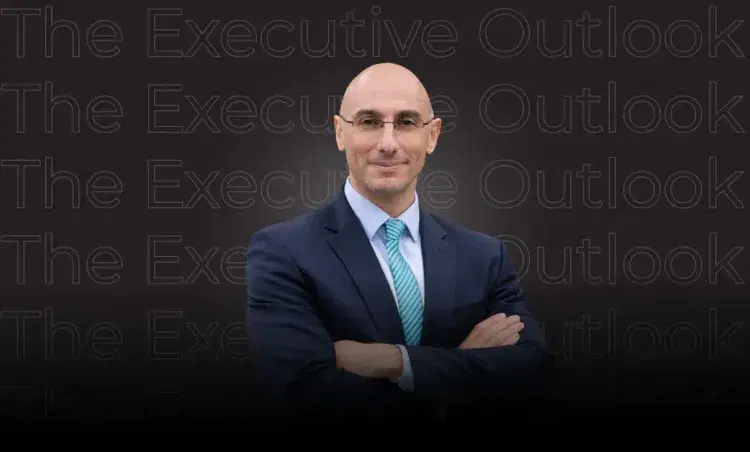
Nic’s journey into leadership did not start with a big plan. He shared something many leaders quietly feel but rarely say. He never chose leadership as a goal. He stepped into it because he wanted to influence things at a bigger level.
As an engineer, he could improve a program or a product. But the impact stayed limited to what he personally touched. In leadership, he could change how multiple teams worked and how an entire system was delivered. One change could achieve many outcomes.
One key moment came when a CTO left and Nic was asked to step in and guide the team. He had not done that before, but he said yes. Not because it was comfortable, but because it would stretch him and increase his impact.
That is how Nic describes his pattern. He keeps choosing the role that creates bigger impact, even when it feels new.
Prefer to listen on the go? Tune in to the full podcast episode on Spotify below:
Nic shared another turning point. At one stage in his career, he reached a point where he had done what he wanted to do in the role. He could not clearly see what the next level looked like. That uncertainty pushed him toward executive coaching.
Coaching helped him put clear words to what leadership meant to him. It also helped him shift his mindset.
Earlier, he felt the need to contribute directly and be part of the solution. Over time, he began to see leadership as helping others become better, helping teams work with more clarity, and helping groups move forward together.
For Nic, that shift mattered. It made leadership less about doing more work and more about unlocking others.
When Nic advises leaders today, it is often in companies that are scaling fast, especially when engineering teams are growing from an early stage into a more structured organization.
His message is direct. Growth brings change. Culture changes. Team behavior changes. Decision making changes. Communication changes.
If leaders are not intentional during these growth points, the effects can last for years. So his advisory work is not only about giving information. It is about helping leaders understand what is happening, what the shift feels like, and how to guide teams through it with clarity.
A big part of his approach comes from coaching. He asks questions. He looks for clarity. He helps leaders see the real problem before they try to fix it.
Nic also spoke about a common pattern in early stage teams. Speed often becomes the culture. Move fast. Ship fast. Get to market first.
He agrees that speed matters early. But he also warns that speed does not always scale well. Over time, speed can turn into reckless delivery if quality, performance, and reliability are not protected.
So the goal is not to kill speed. The goal is to mature it. Leaders need to be clear about what speed means, where speed helps, and where speed becomes risk.
When I asked Nic how leaders can handle cultural mismatch when new people join, he brought it back to the start. Hiring.
He puts strong focus on cultural interviews. Not as a soft question about values, but as a serious check on whether a person aligns with how the team works, and whether they will add to the culture, not pull it away.
Every business defines culture in its own way. But Nic believes culture must stay at the centre of hiring decisions. If hiring ignores culture, leaders pay for it later through friction, slower delivery, and loss of trust.
One of Nic’s most useful ideas is a simple reframe.
When a new person joins, it is not the same team plus one. It becomes a new team.
That new team needs time to align on who they are and how they work. Nic shared that he used regular alignment sessions, often once per quarter, using tools like a team canvas.
In these sessions, the team gets clear on purpose, ownership, what good delivery looks like, personal values, strengths, and what trust means inside the team.
Then they merge individual views into one shared team view. That shared view becomes the first version of how the team operates and how they hold each other accountable.
Nic believes this clarity is what makes feedback possible. Without clarity, people hold back. Retros become weaker. Tension builds quietly. Results drop slowly.
Nic explained that strong delivery is not forced. It is designed. A leader’s job is to design an environment where teams can thrive, with clear understanding of what success looks like. This is how high-performing engineering teams are built in real life.
When he enters a new team or business, he starts like an audit. He observes first. He gathers information. He tries to understand people, process, and the real blockers.
In the first week, he prioritizes one on one with everyone. He asks what works, what does not, where friction lives, and what slows delivery. He also tries to understand technical challenges and platform problems that affect developer speed.
Then he looks for the highest leverage changes. If the team is strong but lacks clarity, he doubles down on clarity, purpose, and process. He sets short goals, often across a few weeks, and measures how effectively the team can reach them. He even sets simple weekly targets like increasing release frequency from 6 updates to 12 updates, so the team can see progress clearly. After that, he reviews what slowed them down and removes those blockers.
He also looks closely at developer experience. He checks the build and deployment flow, testing, tools, and environments. Then he brings the team into the solution. The team helps identify which changes will make them faster and more effective.
Nic also likes visual maps. He maps decision flows and deployment cycles. He prefers to make decisions with evidence and simple metrics, not assumptions. He shared that teams should keep evolving regularly, not just shipping work.
Nic shared what he would teach in a ninety-minute workshop for new engineering managers, especially those moving from individual contributor roles into leadership.
First, he would start with clarity. Your role has changed. You are no longer the person who solves every problem. You are the person who improves the team’s ability to solve problems.
Second, he would focus on the process. Where is the team going slow and why? Leaders should find the friction and remove it.
Third, he would focus on people. Nic admitted a mistake he made early. He used to jump in and fix problems himself. Over time, he learned that leaders should coach, not rescue. The goal is to teach teams how to solve problems without needing the leader every time. This is how teams become confident and independent.
He also shared two simple actions leaders can start immediately/
Nic shared a story that makes the speed versus quality question real.
At one company, they pushed a deep link feature quickly. The goal was to move a user fast through the purchase funnel into checkout. It was built in a couple of days and shipped fast.
When it went live, it broke. The deep link did not work. The funnel broke. Sales were lost.
Nic’s point was not that speed is bad. His point was that speed without quality can quietly destroy value. Leaders should move fast internally in how they learn and improve, but when they expose systems to customers, quality must be the priority.
He also questioned artificial deadlines. Many teams rush for dates like the end of the quarter even when a small shift, like shipping on Monday instead of Friday, could reduce risk and give better support coverage.
For Nic, the answer comes back to clarity. If you are clear on what matters and why, you can choose the right pace without damaging trust.
Nic Goodall brings a calm and practical view of leadership in engineering. He does not romanticize results. He breaks it down into things leaders can actually do.
He believes culture will change as a team scale. Leaders must guide that change with intention. Hiring must protect culture. Teams must align again when the team changes. Leaders must build clarity into goals, processes and feedback. Speed must be balanced with quality, especially in customer-facing systems.
And as AI tools grow in 2026, Nic’s message becomes even more important. Tools can speed up tasks, but they cannot replace trust and clarity. Leaders still have to lead humans, and that is what keeps high-performing engineering teams strong over time.