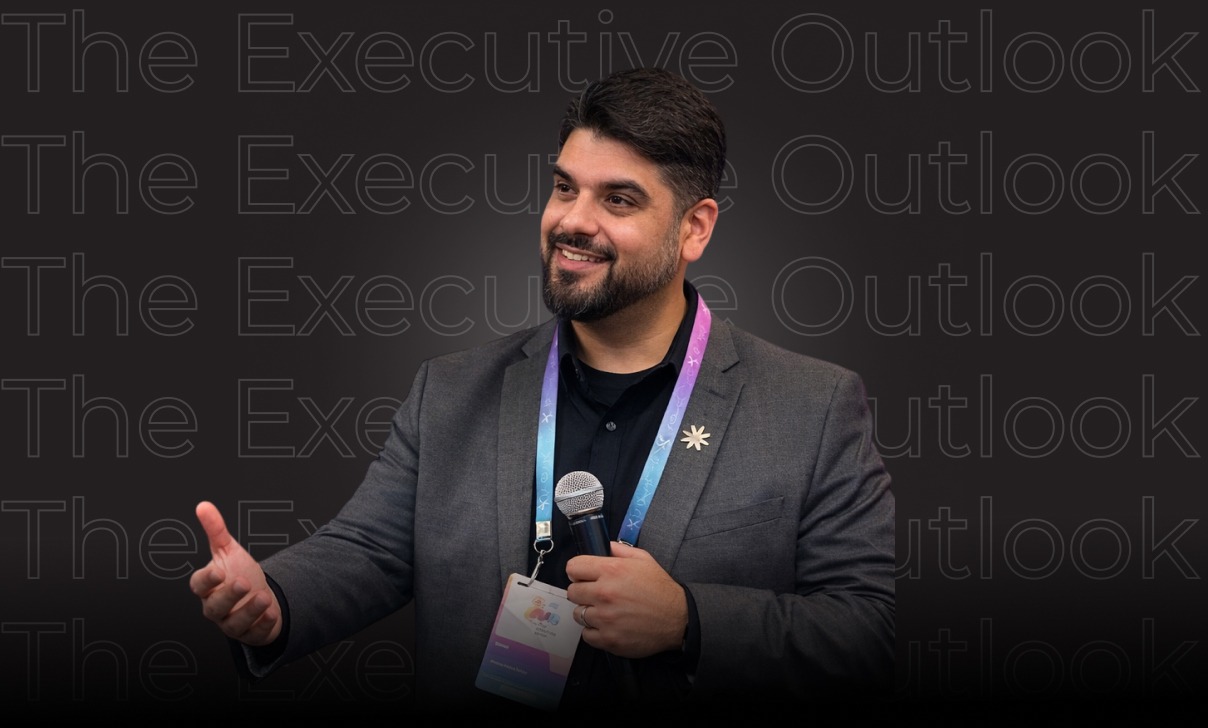

In this episode of The Executive Outlook, Ben Banks, President and CEO of BNSF Logistics, shares a leadership story that starts far away from boardrooms. It starts with late nights, tough shifts, and a role where every decision could affect safety, customers, and the entire network.
If you’re looking for logistics leadership lessons that feel real (not motivational posters), Ben’s journey delivers. Because he didn’t grow by skipping steps. He grew by living the hard steps.
The first role that changed everything
Ben joined BNSF Railway in 2007 as a trainmaster. He describes it as an air-traffic controller, but for trains. He wasn’t operating trains. He was managing the people who did, making sure rail cars moved in the right direction and reached customers safely and efficiently.
He spent about five years in that role, and he calls it pivotal. Not because it was comfortable but because it gave him an inside view of rail operations that most people never get. He learned how customers truly experience service, what breaks quietly, and how a small delay can turn into a big network problem.
That job became the foundation of how he leads: learn the system first, respect the people doing the work, and don’t confuse “what should happen” with “what actually happens.”
There’s another detail Ben shares that matters. He says BNSF doesn’t usually throw people into huge jumps overnight. Responsibility increases in steady steps, so you grow without constantly feeling overwhelmed. But he also admits one exception: that very first trainmaster role. That role hit hard,fast, and stretched him more than anything else early on. And in many ways, it became the “pressure test” that prepared him for everything later.
Prefer to listen on the go? Tune in to the full podcast episode on Spotify below:
The toughest challenge wasn’t CEO
When Ben talks about the hardest challenge of his career, he doesn’t point to becoming CEO. He points to that first trainmaster job.
He walked in as a first-line supervisor, leading people who were deeply experienced and far more knowledgeable than he was. That’s a leadership test that hits instantly. Your team can tell if you’re pretending. And if you lead with ego, trust disappears fast.
On top of that, the workload was intense. Nights, weekends, long stretches. He even remembers working 72 hours straight. He notes that trainmaster retention is often low because the job is demanding. He also jokes that he had more energy twenty years ago than he has now and he’s not sure he could repeat that physical grind today.
He adds something personal too: a lot of people were praying for him, and he had support. It’s a small line, but it shows how he sees leadership, never as a solo game.
Watch the full conversation on YouTube by clicking the link below:
The logistics leadership lessons that helped him earn trust
Ben didn’t solve that early pressure with one big move. He solved it with a mindset and he kept repeating.
First, he had a “whatever it takes” work ethic. He believed he couldn’t control everything yet, but he could control effort. He didn’t want to be outworked. Early in a role, he says, it’s hard to “work smart” because you’re still learning. So you work hard, stay steady, and learn fast until you build judgement.
Second, he led with humility and transparency. He told his team directly: “I don’t have all the answers.” That matters when your people know more than you do. It tells them you’re here to learn, not to perform.
Third, he asked real questions and used the answers. He asked what was working, what wasn’t, how it should work, and what ideas his team had. Then he applied those ideas. That’s how he built credibility. Not by acting like the expert, but by listening well and improving the system with the people inside it.
A line he refused to cross: treat people well
One of the strongest moments in the conversation is when Ben makes something very clear: he didn’t learn how to treat people well at the railroad. He brought that value to him.
He also admits that he saw the opposite. In high-pressure environments, some leaders don’t know how to inspire, don’t know how to lead, and don’t treat people with respect. Ben says he received advice from different people over time, but he learned to filter it. If the advice came from someone who didn’t know how to lead humans, he considered it bad advice, even if it sounded effective in the short term.
That choice sometimes created friction. But he stayed consistent, and he says results proved the difference over time.
Curiosity became his “dot-connecting” advantage
Ben Banks describes himself as naturally curious. He asks questions beyond his role about other people’s experiences, what they’ve seen before, and how they handled similar problems.
At the time, those conversations may not impact his day. But years later, he remembers them and connects dots. That curiosity helps him observe patterns, understand timing, and make better decisions without getting stuck in one narrow viewpoint.
Why his move into sales worked
After about five years, Ben moved into sales and marketing at BNSF Railway. But he didn’t step into sales like someone who only knew how to pitch. He stepped in with operational credibility.
He could help customers build programs, troubleshoot issues, and advocate internally because he understood the rail network from the inside. Many peers didn’t have that background. Customers noticed, and they started advocating for him to leadership.
That customer advocacy mattered. It shifted how the organization saw him and helped set the trajectory he eventually followed.
The “big, ugly, weird” freight chapter
Later, Ben led a portfolio that handled what he calls the “big and ugly and weird” large, complex shipments that moved across the BNSF network. It was another kind of leadership training: less about perfect processes and more about handling exceptions, complexity, and risk while still delivering reliability.
This chapter also explains why the next step made sense.
Becoming CEO in 2024: bridging two silos
One of Ben’s customers was BNSF Logistics, the sister company of BNSF Railway, established in 2002. For years, they operated in separate silos. The board had a vision to bring them closer together.
What did that actually mean in real life? It meant reducing the “handoff gaps” between rail operations and logistics execution. It meant creating a tighter, more coordinated approach so the customer experience felt more connected end-to-end, not like two different companies operating on two different tracks. It also meant aligning priorities and decision-making so both sides could move faster together, without misunderstandings or competing assumptions.
Ben was uniquely qualified because he understood both sides: rail operations and customer logistics needs. So in 2024, he became President and CEO of BNSF Logistics, and at the time of the conversation, he had been in the role for a little over eighteen months.
He also clarifies that BNSF Logistics operates as an engineering and project management firm as well so clear execution and alignment are not “nice to have.” They’re the business.
How Ben defines the CEO job
Ben is honest that this is his first CEO role. He reads constantly and asks for advice. He mentions learning from other CEOs, including his brother (also a CEO) and Katie Farmer, CEO of BNSF Railway.
Two books helped him frame the role: The CEO Test and CEO Excellence (McKinsey). He keeps his priorities on a whiteboard next to him and checks his calendar against them.
His CEO responsibilities, in simple terms, are to set direction, align the organization, mobilize through leaders, manage personal effectiveness, engage the board, and connect with stakeholders.
He also explains how decisions work internally. He runs a roundtable leadership style with a strong C-suite. Big decisions get discussed together. The business leader owns the area, but the full table weighs in. If there’s indecision, he decides, but he doesn’t default to isolation.
He highlights two responsibilities leaders often forget. One is board alignment he owns that relationship. The other is protecting the company through counsel. He isn’t a lawyer, but he stays close to legal risk and relies on his counsel to make sure the company stays protected.
How he launches initiatives without losing focus
When Ben joined, one of his first objectives was to get back to the company’s core. He says many CEOs are doing the same right now, because chasing too many “good ideas” can quietly damage reputation and execution.
He describes having a “navigational heading.” Their vision is to become the premier logistics provider in their space. Their purpose is to deliver empowering solutions, operational excellence, and strategic advantage to customers.
From there, initiatives must fit their wheelhouse. They evaluate new work based on revenue impact and difficulty of implementation. Ben shares a simple way they think about it: they map initiatives on a grid and push hard for the top left quadrant, the work that creates strong revenue impact without becoming a painful, high-risk rollout. His point is clear: discipline matters, because a company can lose years by chasing initiatives that look exciting but are hard to deliver well.
Ben stresses something important: new initiatives don’t come from him alone. They come through collective effort across levels, including directors and leaders who contribute ideas and shape execution. That creates buy-in early and speeds adoption later because people had a voice.
They also rely heavily on customer input and look for first adopters. Ben mentions he’s reading The Lean Startup and admits they could improve by building intentional learning checkpoints during rollout, so they measure what they’re learning, not just what they’re shipping.
Execution discipline is strong. Their COO is Kaizen-focused and a Six Sigma black belt, they use milestones and thresholds, and they track work in tools like Wrike.
The case study: one idea that reshaped an industry
Ben shares a story from about ten years ago when he led the frac sand business. Frac sand is used in fracking, pumped with water to fracture rock and release oil or natural gas. During the U.S. shale boom, demand surged and covered hopper cars started showing up as single car shipments, clogging the network.
Operations came to him with a clear need: customers wanted to scale volume, but the system couldn’t handle it efficiently as it was.
Working with his team, they decided the solution was the unit train model. Load 100 plus cars at one origin, ship them as one dedicated train, and move more directly to destination, like taking an interstate route instead of passing through every small town.
Customers resisted because the model required new infrastructure and operational change. But Ben’s insight was simple: inventory is king. The company that has a product in the market when it’s needed wins, because delays cost more than price.
Procurement teams weren’t excited. After bouncing the idea off his team and experienced leaders, he decided to take a risk and pitch it directly to a customer CEO, and then got redirected to the sales team. The sales team understood instantly: faster time to market, stronger availability, and the ability to win market share.
That first adopter won quickly, which pulled the rest of the industry along. Ben shares the outcome plainly: BNSF went from about 30% market share to 70% in two years. Competitors adopted similar models. The market shifted.
It wasn’t a clever idea story. It was a timing and execution story.
Why projects fail, according to Ben
Ben doesn’t frame failure as a lack of talent. He frames it as patterns.
He says timing is the biggest driver. Even a great idea fails if the moment is wrong. Listening and observing matter because they help you see when timing is right, and they help you tell what he calls a “trend story.” If you can’t read the trend, you’re likely to build the wrong solution at the wrong time.
He also emphasizes resilience. If timing is wrong today, that doesn’t mean the product is dead. Teams fail when they quit too early instead of staying ready for when the market turns.
The sales lesson he leaves you with
Ben gets pitched constantly on LinkedIn and through calls. Sometimes he says no not because the offer is bad, but because timing isn’t right.
He suggests a better question than “When can I call you back?” He recommends asking: what would have to change in your market or company for you to see a need?
That question turns selling into observation and earns trust instead of annoyance.
Conclusion
Ben Banks’ story isn’t just a career timeline. It’s proof that leadership is built before the title arrives. It’s built in tough roles, in honest conversations, and in the daily habit of listening and improving.
The most useful takeaway is simple: logistics leadership lessons are not learned in theory. They’re learned in execution through humility, timing, disciplined focus, and how you treat people when pressure is high.
For more stories of leaders shaping the future of data, AI, and strategy, stay tuned with The Executive Outlook.
Editor Bio

I’m Isha Taneja, serving as the Editor-in-Chief at "The Executive Outlook." Here, I interview industry leaders to share their personal opinions and provide valuable insights to the industry. Additionally, I am the CEO of Complere Infosystem, where I work with data to help businesses make smart decisions. Based in India, I leverage the latest technology to transform complex data into simple and actionable insights, ensuring companies utilize their data effectively.
In my free time, I enjoy writing blog posts to share my knowledge, aiming to make complex topics easy to understand for everyone.